Key events and trends
● Mastering Kubernetes Field Ownership with Server-Side Apply
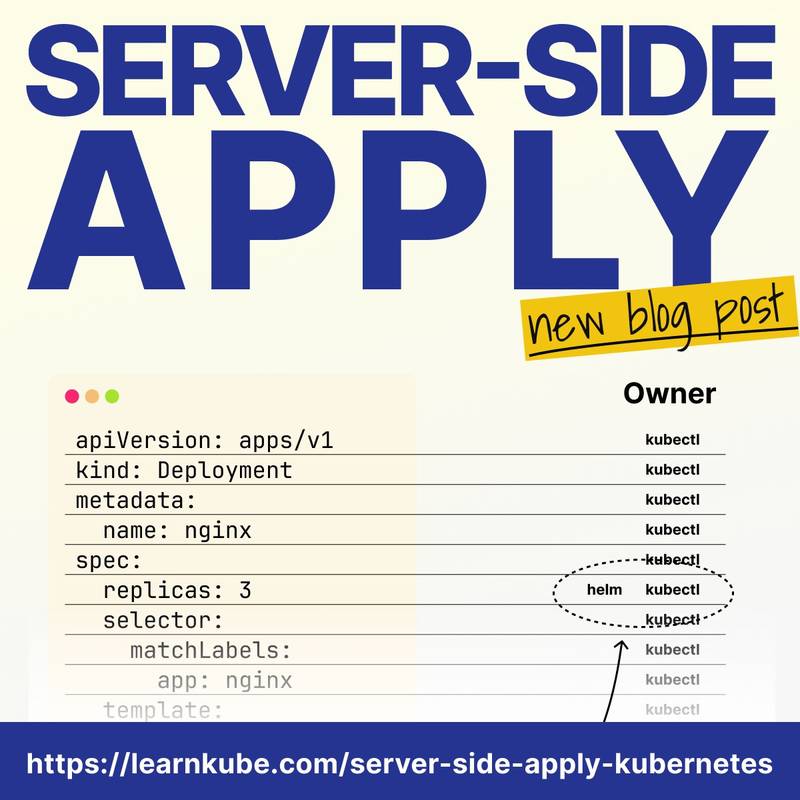
A new guide from LearnKube delves into Server-side apply, a crucial feature that redefines how Kubernetes manages field ownership. Unlike client-side apply, which can lead to stale intent overwriting live changes, server-side apply shifts ownership tracking to the API server. This mechanism ensures Kubernetes precisely monitors which manager controls each field, surfacing conflicts when ownership becomes contested and promoting a more robust and predictable state management within shared object environments.
 ↳
↳ @Kubesploit ([Kubesploit](https://t.me/Kubesploit)) (forwarded by ) highlighted this detailed guide as essential reading for understanding complex Kubernetes object interactions.
Read the full guide: https://learnkube.com/server-side-apply-kubernetes
● Prioritizing Adoption Over Features in Kubernetes Security
John Howard, Senior Software Engineer at Solo.io, emphasized that the primary challenge in Kubernetes security is not the lack of advanced features but rather the struggle with adoption. He revealed that the genesis of Ambient Mesh was a direct response to user demand for "just mTLS" without the prohibitive overhead often associated with full-service mesh implementations. Ambient Mesh was engineered for compatibility and a minimal footprint, working seamlessly with any application and capable of cluster-wide deployment without disrupting existing workloads. Howard stressed the importance of establishing pervasive baseline security before venturing into sophisticated authorization policies or AI-driven anomaly detection.
Watch the full episode: https://kube.fmhttps://ku.bz/sk-ZF1PG9
↳ @Kubesploit ([Kubesploit](https://t.me/Kubesploit)) (forwarded by ) shared insights from this interview, underscoring a pragmatic approach to cloud-native security.
● AWS Enhances Serverless Isolation with Lambda MicroVMs
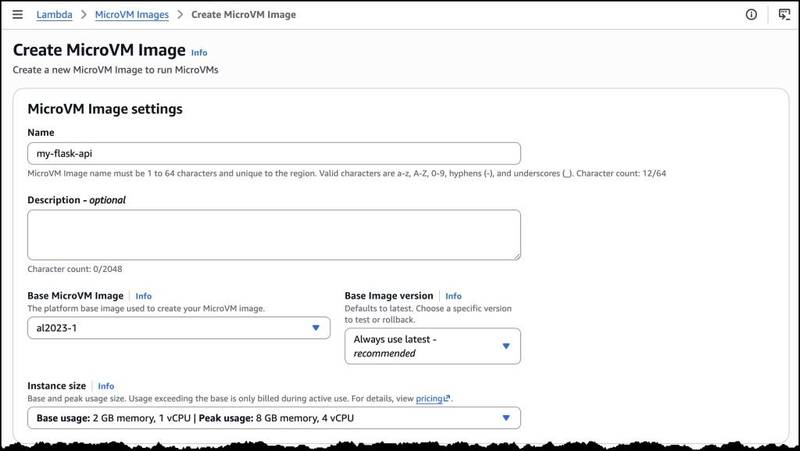
AWS has rolled out a significant security enhancement for its serverless compute offerings with the introduction of AWS Lambda MicroVMs. This new primitive delivers VM-level isolated sandboxes, ensuring no shared kernel or resources between sessions. Key features include rapid launch and resume capabilities, full lifecycle control, state preservation for up to 8 hours, and the continued benefit of no infrastructure management for users. This development markedly improves isolation guarantees for serverless workloads.
 ↳
↳ @cloud_sec ([CloudSec Wine](https://t.me/cloud_sec)) announced this launch, marking a step forward in secure and isolated serverless execution.
Read the AWS blog: https://aws.amazon.com/ru/blogs/aws/run-isolated-sandboxes-with-full-lifecycle-control-aws-lambda-introduces-microvms
Live discussions
No standalone discussions were recorded outside of the channel-originated news items for this period.
Social graph
No direct participant interactions or discussions were observed that would allow for a social graph analysis of roles (Expert, Initiator, Skeptic, Provocateur) for this day. The content primarily consisted of news dissemination from group administrators/bots.
Final analytics
The day's cloud-native security landscape was marked by three significant announcements, all converging on themes of foundational security, robust infrastructure, and improved isolation. The updates focused on enhancing core Kubernetes operations through server-side apply for better configuration management, emphasizing the practical adoption of baseline security measures like mTLS via Ambient Mesh, and advancing serverless workload isolation with AWS Lambda MicroVMs.
The prevailing emotional tone is informative and forward-looking, highlighting advancements in managing complex cloud-native environments and securing serverless architectures. A notable information gap is the complete absence of community discussion or reactions to these developments within the provided data. This means there's no insight into how security professionals are currently perceiving or planning to adopt these innovations, nor any live disputes or agreements.
The potential consequences of these developments point towards a more secure and manageable cloud-native future. Server-side apply could reduce configuration drift and errors in Kubernetes, while the focus on mTLS adoption through Ambient Mesh addresses a critical, yet often neglected, security baseline. AWS Lambda MicroVMs directly mitigate risks associated with multi-tenancy in serverless environments, promising stronger isolation for sensitive workloads. The key trend is a continued push towards intrinsic security mechanisms deeply integrated into the infrastructure layer, rather than relying solely on bolt-on solutions.