Key events and trends
● New Kubernetes Operator: Koney for Deception Policies:
A new Kubernetes operator named Koney has been introduced to implement "deception policies" for discovering and deterring malicious users within clusters. It creates fake sensitive files (e.g., /run/secrets/koney/service_token) in selected Pods and monitors access attempts via Cilium’s Tetragon or the eBPF-powered kivebpf. Events are logged, and alerts can be sent to external systems like Dynatrace. Future plans include additional deceptive techniques and integration with Kyverno policies.
()
▶️ GitHub repo
● Enhanced CloudWatch Logs Delivery for Amazon EKS Auto Mode:
An article explores the newly introduced CloudWatch Logs delivery feature for Amazon EKS Auto Mode, providing better visibility and integration for logging within EKS environments.
()
 Read more: https://shinyaz.com/en/blog/2026/03/19/eks-auto-mode-enhanced-logging
● AI-powered SRE as the Next Frontier for Kubernetes Observability:
Itiel Shwartz, CTO at Komodor, highlights AI-powered SRE as the biggest trend in observability, particularly for Kubernetes. The shift involves injecting AI directly into observability workflows, from detection to remediation, moving beyond traditional metrics collection.
( forwarded by )
 Watch the full interview: https://ku.bz/b9bDXQ_xq
● Implementing Auditable Decision Logging for Open Policy Agent (OPA) in Kubernetes: Nicholaos Mouzourakis, Staff Product Security Engineer at Gusto, detailed their implementation of auditable decision logging for Open Policy Agent (OPA) in Kubernetes using Styra's Declarative Authorization Service (DAS). DAS ingests and indexes OPA decision logs, making them searchable for tracking user actions, resource access, and policy change simulations. ( forwarded by ) Watch the full episode: https://ku.bz/S-2vQ_j-4
● Kubernetes Operator Status Conditions as the Single Source of Truth:
An article clarifies why Kubernetes operator status conditions should serve as the single source of truth, explaining how the operator's phase can be derived declaratively from these conditions. A Go library with an interactive browser demo is introduced to facilitate this approach.
( forwarded by )
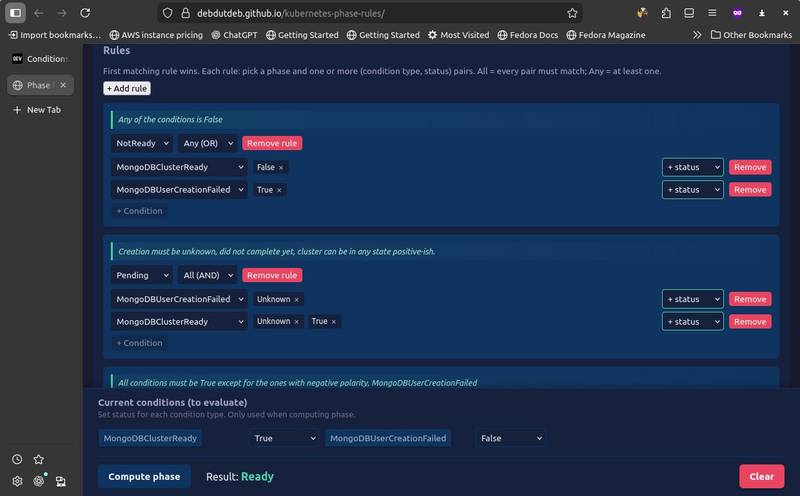 More: https://ku.bz/m0NRS-XR2
● Learn Kubernetes Weekly 188 Digest:
The latest Learn Kubernetes Weekly newsletter covered several topics, including:
* Debugging ipBlock issues with HTTPS in Kubernetes (NetworkPolicy, Traefik, Hairpin Routing).
* How Nginx's new resolve directive helps fix Kubernetes 502 errors.
* Best practices to consider before implementing KEDA.
* The continued need for human intervention in CI/CD pipeline failures.
* Proposing SLOs as Kubernetes Resources rather than Grafana Dashboards.
( forwarded by )
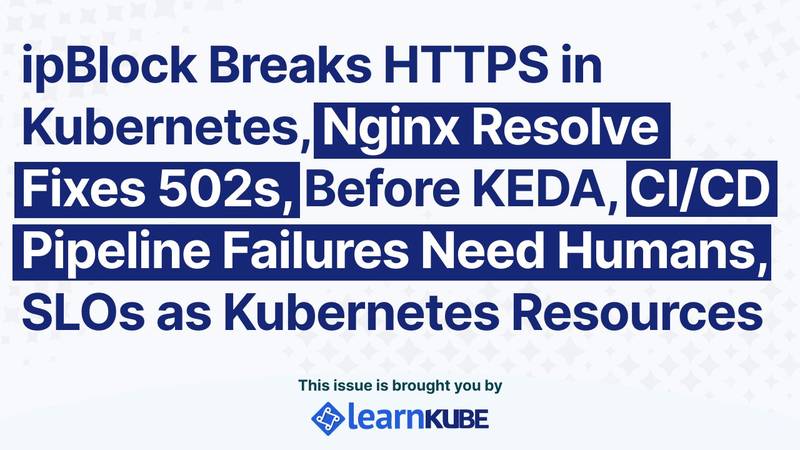 Read it now: https://kube.today/issues/188
Live discussions
(No significant live discussions were observed in the monitored chats that were not directly linked to channel news.)
Social graph
(No chat messages were available for analysis of participant roles and connections for the day.)
Final analytics
The cloud-native landscape on 17.06.2026, as reflected in the news, shows a significant push towards enhanced security, improved observability, and the integration of AI into operational workflows. New tools like the Koney operator highlight an increased focus on proactive security measures within Kubernetes. Updates to core cloud services, such as enhanced logging for Amazon EKS Auto Mode, indicate continuous refinement of managed Kubernetes offerings, aiming for better operational insights.
A prominent theme is the growing influence of AI in SRE and observability, suggesting a shift from passive monitoring to more intelligent, AI-driven detection and remediation, particularly for complex Kubernetes environments. Best practices in Kubernetes operator development, advocating for status conditions as a single source of truth, and detailed debugging guides reflect a community striving for more robust and maintainable infrastructure.
The overall tone is informative and forward-looking, with a clear emphasis on innovation in managing and securing cloud-native applications. A notable gap in today's data is the absence of community reactions or discussions, providing only a channel-driven perspective. This limits insights into potential controversies, points of agreement, or practical challenges faced by practitioners, leaving the emotional tone largely neutral and academic.