Key events and trends
-
Learn Kubernetes Weekly 194 Highlights Cloud-Native Security and Efficiency LearnKube news (forwarded by (Kubesploit)) summarized key articles. Topics included a 3-person tech team running production Kubernetes with an AI SRE, an analysis of a $40,000 GPU bill, and a copy-fail issue in Kubernetes where PSS Restricted and RuntimeDefault did not block
AF_ALG. Other highlights covered setting up a private container registry for 6 AKS clusters across 3 regions and implementing GitOps with Terraform usingtofu-controllerfor Grafana and Hashicorp Vault as Code (источник).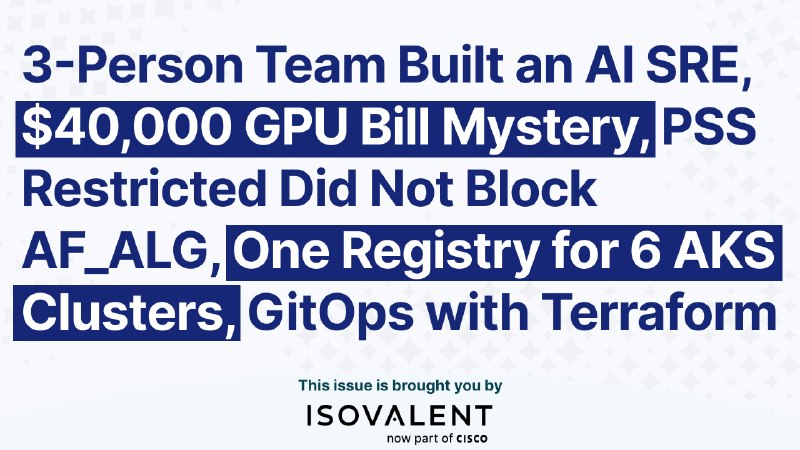
-
Solving Kubernetes GPU Resource Monopolization with Kyverno Policies KubeFM (forwarded by (Kubesploit)) featured Alessandro Pomponio, Research Software Engineer at IBM Research. He explained how his team used Kyverno policies to prevent GPU resource monopolization in Kubernetes clusters. This involved blocking
pod execcommands, with exceptions for administrators, to stop researchers from using idle pods as virtual machines and causing GPU starvation (источник). -
Building a Kubernetes Security Console (Kubesploit) shared an article detailing how to build a Kubernetes security console. This console integrates CRD-based security findings and runtime events into a unified MCP-backed triage surface (источник).
-
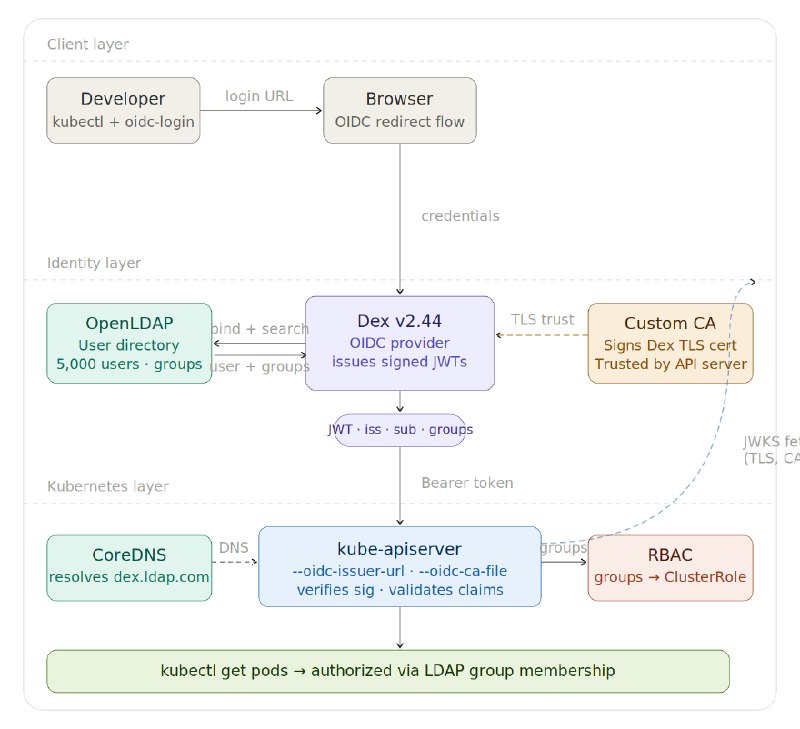
Kubernetes Authentication with LDAP, Dex, and OIDC (Kubesploit) provided a tutorial explaining how to connect Kubernetes authentication to LDAP via Dex and OIDC. The tutorial covers essential steps such as managing certificates, setting up OpenLDAP, configuring Dex Helm, establishing API server trust, defining token claims, and mapping RBAC groups (источник).
-
Focus on On-Premise for Edge Deployments Due to Sovereign Requirements KubeFM (forwarded by (Kubesploit)) shared an interview with Przemysław Wojtunik, who discussed the increasing demand for on-premise installations in edge deployments. This trend is driven by customers' sovereign requirements and their need for transparency regarding technology origins and workload locations (источник).
-
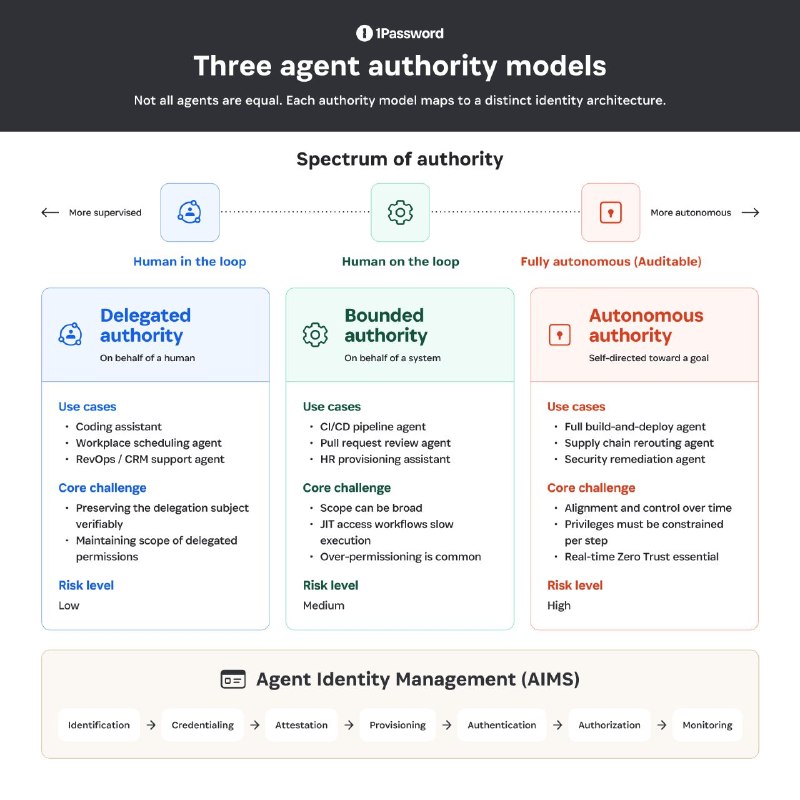
Reference Architecture for Local AI Agent Identity and Prompt Injection Defense (CloudSec Wine) presented a reference architecture for giving locally-running AI agents a trustworthy, auditable identity without relying on long-lived credentials on disk. The architecture includes a structural defense against prompt injection built into the protocol layer (источник).
-
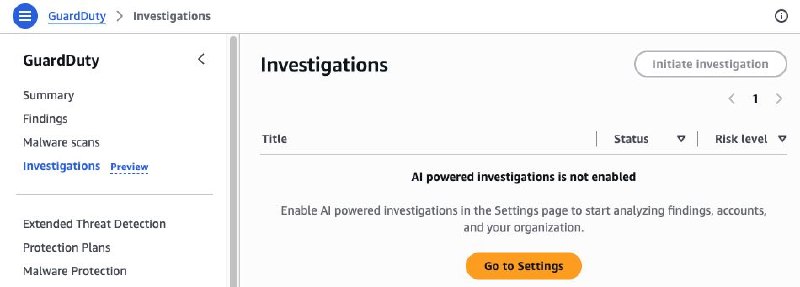
Amazon GuardDuty Introduces AI-Powered Investigation Agent (Public Preview) (CloudSec Wine) announced the public preview of the Amazon GuardDuty investigation agent. This AI-powered tool automates the investigation of GuardDuty security findings, reducing assessment time from hours to minutes. It provides risk levels, confidence scores, MITRE ATT&CK mappings, and remediation steps via console, CLI, API, or AWS MCP server (источник).
-
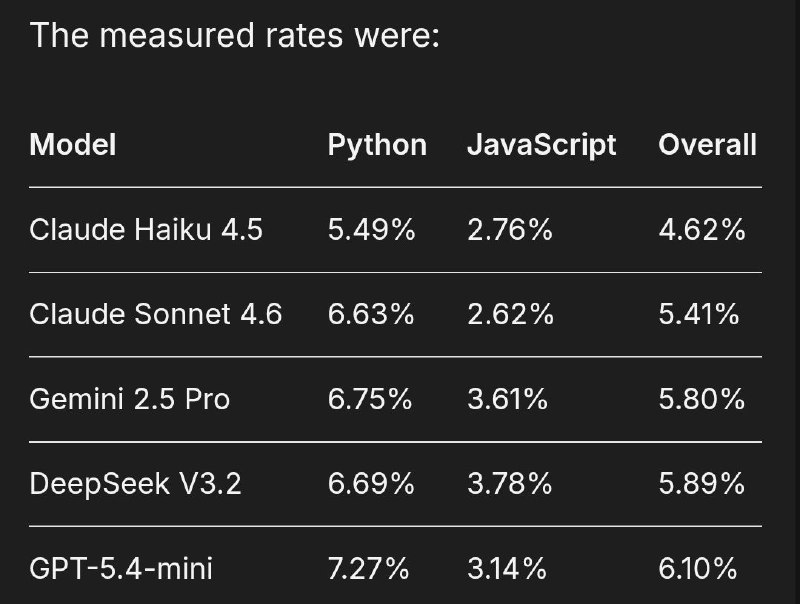
Study Reveals Slopsquatting Vulnerabilities in Frontier LLMs (CloudSec Wine) highlighted a new study that identified 53 potential "slopsquatting" targets across five frontier LLMs (Claude, GPT, Gemini, DeepSeek). The study analyzed approximately 200,000 LLM responses, finding that these models hallucinate nonexistent package names at a rate of 4.62-6.10%. Many of these fictitious names are still registrable on PyPI/npm, making them exploitable via slopsquatting attacks (источник).
Live discussions
(No relevant live discussions were identified in the provided data for this period.)
Social graph
- (Kubesploit): Initiator, actively publishing curated news, tutorials, and analyses focused on Kubernetes security, infrastructure management, and DevSecOps best practices, often forwarding content from specialized channels like LearnKube news and KubeFM.
- (CloudSec Wine): Initiator, sharing critical updates and analyses concerning cloud security, AI security, and emerging threats, including reference architectures and research findings.
Final analytics
The period from July 29 to July 31, 2026, showcases a robust and evolving landscape in Cloud Native Security, with significant cross-pollination from DevSecOps and AI Security. The focus remains sharp on practical Kubernetes security, addressing issues from container isolation (PSS, RuntimeDefault failures) and authentication complexities (LDAP, Dex, OIDC) to efficient resource management (Kyverno policies for GPU control). The emphasis on building consolidated security tooling, like a Kubernetes security console for unified triage, reflects a drive towards operationalizing security insights.
A prominent trend is the dual nature of Artificial Intelligence in security. On one hand, AI is rapidly being integrated as a powerful defense mechanism, exemplified by Amazon GuardDuty's new AI-powered investigation agent, designed to drastically cut down threat assessment times. This represents a clear innovation in proactive threat detection and response within cloud environments. On the other hand, AI introduces novel attack surfaces and vulnerabilities, as highlighted by the "slopsquatting" study, where LLMs inadvertently create targets for supply chain attacks. This necessitates concurrent advancements in securing AI agents themselves and developing robust defenses against threats like prompt injection.
The strategic decision-making around infrastructure, particularly the continued relevance of on-premise deployments for edge computing due to sovereign requirements, underscores the intricate interplay between geopolitical factors, data locality, and cloud-native architecture. The overall tone of the observed content is highly informative and analytical, indicating a community keenly focused on technical solutions and threat intelligence in a rapidly evolving technological ecosystem. While the provided data lacked direct group discussions, the breadth of shared articles suggests a strong collective interest in mitigating risks across the cloud-native stack, from infrastructure to application logic, with a keen eye on AI's burgeoning role.