Key events and trends
-
Kubernetes Container CPU Management Update for Go 1.25+ @LearnKubeNews explained that the
automaxprocstool can reduce the CPU available to a container running Go 1.25 and later, as Go now handles cgroup CPU limits directly (источник).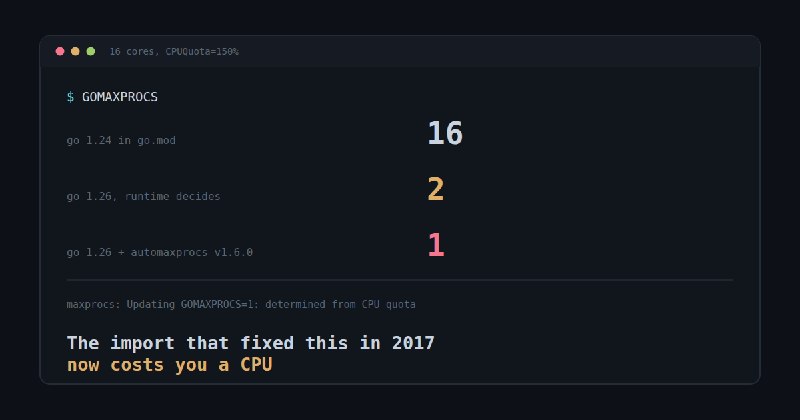
-
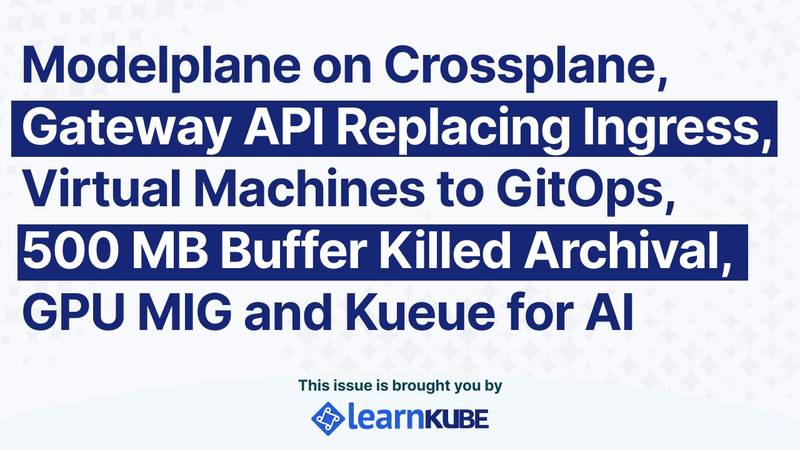
Learn Kubernetes Weekly 203 Highlights GitOps, EKS, and AI Workloads @Kubesploit (forwarded by @LearnKubeNews) published Learn Kubernetes Weekly 203. Key topics included building Modelplane on Crossplane, understanding why Kubernetes Ingress is being replaced by Gateway API, modernizing DevOps platforms on AWS EKS with GitOps, resolving archival job issues through streaming, and transforming multi-tenant AI workloads on Kubernetes using GPU MIG + Kueue. Read it now (источник).
-
Kubernetes Entering Maturity Phase with Increased Focus on Security and AI Tooling @Kubesploit (forwarded by @KubeFM) shared Mauro Morales's perspective that Kubernetes is entering a maturity phase, which will bring more focus on security, compliance, and standardization. Morales suggests that innovation is shifting towards AI tooling that assists operators in managing growing complexity, including projects that deploy Kubernetes using Kubernetes. Watch the full interview (источник).
-
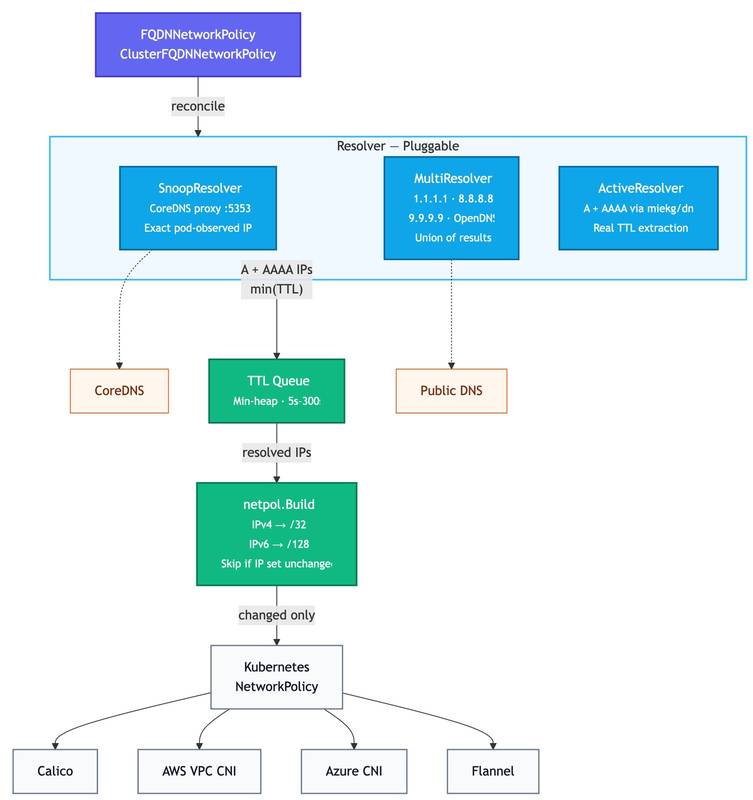
New FQDN Network Policy Enhances Kubernetes Outbound Traffic Control @Kubesploit announced an FQDN Network Policy that translates hostnames into current IP addresses, generating standard Kubernetes NetworkPolicy rules. This feature enables teams to control outbound traffic on any CNI without requiring a network plugin replacement. More information: https://ku.bz/NprbZjd3s (источник).
-
RCE Vulnerability and SSO Misconfiguration Used to Hack OpenAI @cloud_sec reported that researchers achieved Remote Code Execution (RCE) on community.openai.com. This was accomplished by chaining a
libheifheap buffer overflow (exploited via Discourse/ImageMagick image upload) with an OpenAI SSO misconfiguration, leading to the takeover of employee ChatGPT/Codex accounts and access to OpenAI's internal GitHub monorepo. https://www.hacktron.ai/blog/hacking-openai (источник).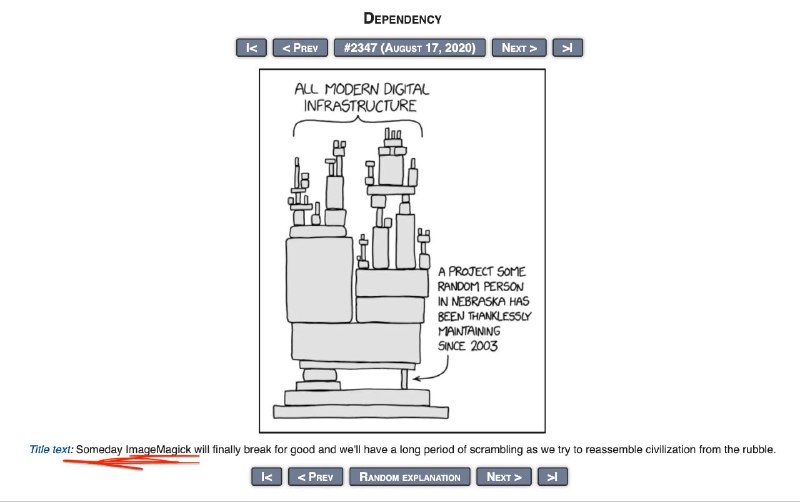
-
Vaikora LLM Gateway Introduced for AI Agent Security and Policy Enforcement @devsecops_weekly presented the Vaikora LLM Gateway, a tool designed to monitor and control AI agent interactions. It intercepts and analyzes agent actions against defined policies, categorizing them as ALLOW, ALLOW_LOG, CONSTRAIN, or BLOCK. The gateway can detect activities such as confidential information leakage, jailbreaks, and prompt injections, supporting LLMs like OpenAI, Anthropic, Google Gemini, and OpenRouter with a deterministic rule engine. GitHub - Data443/vaikora-llm-gateway (источник).
-
Microsoft WSL 3.0 Streamlines Linux Containers and Introduces Enterprise Features @devops_dou announced the update to Microsoft WSL 3.0, which now fully integrates Linux containers, allowing direct management without a separate Docker Desktop installation. Key enhancements include faster Windows file access via virtiofs, a new network model, GPU support, and enterprise management capabilities through Defender and Intune (источник).
Live discussions
No live discussions were observed on this day.
Social graph
- @LearnKubeNews: Authored an analysis post on Go container CPU management and was the original source for a forwarded digest.
- @Kubesploit: Shared a weekly digest, a key interview summary on Kubernetes maturity, and announced a new network policy.
- @cloud_sec: Reported a significant security vulnerability affecting OpenAI.
- @devsecops_weekly: Introduced a new security tool for AI agents.
- @devops_dou: Announced a major product update for Microsoft WSL.
Final analytics
The day's news highlights a strong dual focus on server infrastructure advancement and enhanced security measures, particularly within the Kubernetes and DevOps ecosystems, with a growing influence from AI. Key trends include:
- Infrastructure Evolution: Updates like Go's handling of cgroup CPU limits and Microsoft's WSL 3.0 signify continuous improvements in container management and development environments. Kubernetes networking is also evolving with new FQDN Network Policies to enhance traffic control.
- Security at Maturity: The industry recognizes Kubernetes is maturing, shifting focus towards increased security, compliance, and standardization. This is underscored by critical security incident reports, such as the OpenAI RCE vulnerability, which emphasize the ongoing need for robust AppSec practices.
- AI Integration and Security: AI is increasingly central, not just as a workload but as a new attack surface. The introduction of tools like Vaikora LLM Gateway illustrates a proactive approach to securing AI agents against vulnerabilities like prompt injection and data leakage. AI tooling is also seen as a future growth area for managing Kubernetes complexity.
The overall sentiment reflects an industry committed to refining core infrastructure while vigilantly addressing new and evolving security threats, especially as AI becomes more integrated into operations. The absence of group discussions limits insight into immediate community reactions or practical implications of these developments.