Key events and trends
● Kubernetes 1.36 Enhances CPU and Memory Assignment at Pod Level Kubernetes 1.36 allows kubelet to assign CPU and memory resources at the pod level. This enables main containers to secure exclusive NUMA-aligned cores while sidecar containers share remaining resources. (источник)
● Talos Linux Integrates Native Hypervisor and Sidero Labs Joins Yardi Talos Linux, an open-source operating system for Kubernetes, is adding a KVM-based hypervisor to run virtual machines natively without relying on KubeVirt. This open-source solution will see an alpha release and public demo at TalosCon 2026 (October 15-16 in Amsterdam), with general availability expected in December. Concurrently, Sidero Labs, the commercial entity behind Talos, has joined Yardi, a real estate software business. Sidero Labs will continue to operate independently, ensuring Talos Linux remains fully open source under the MPL 2.0 license. (источник)
● Practical Guide to Local Multi-Cluster Platform Engineering Lab with GitOps A guide detailing the process of building a local multi-cluster platform engineering lab using vind, Sveltos, and Argo CD. The resource covers key practices such as GitOps, label-based deployments, drift correction, and common networking challenges encountered during setup. (источник)
● Observability and Trust for Multi-Agent AI Systems on Kubernetes Explored An episode of Kube Signals discussed observability, state management, governance, and trust in non-deterministic multi-agent AI systems. Key points included how multi-agent runtimes can inadvertently recreate monolith scaling issues, OpenTelemetry's role in exposing AI prompts, completions, and decisions, and how execution history can provide measurable evidence for agent trust. (источник)
● David Parry Advocates for Deterministic Guardrails in AI Systems Interacting with Kubernetes David Parry argues that AI systems touching Kubernetes require deterministic, explicit, and enforceable guardrails. These rules must be tailored to the specific company, deployment model, and compliance requirements, especially regarding sensitive data. He highlights code review and YAML inspection as critical areas where such guardrails should be implemented, rather than left to improvisation. (источник)
● Analysis of Copy Fail Pod Escape Vulnerability on Talos Linux
An article provides a walkthrough of a real "Copy Fail" pod escape vulnerability discovered on Talos Linux. It explains how a shared page cache can compromise container isolation and details how solutions like gVisor or microVMs can help mitigate such risks. 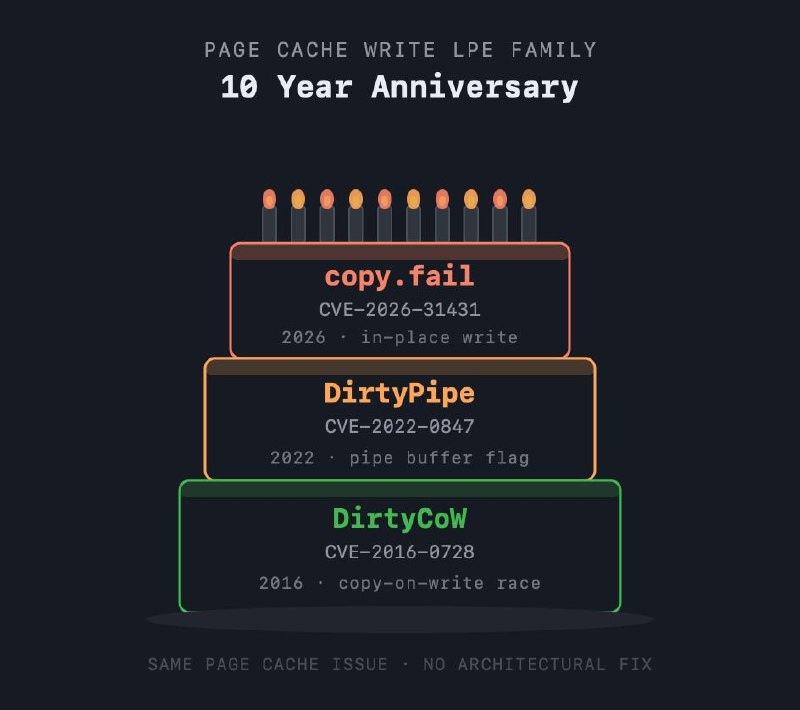 (источник)
● AWS Security Incident Response Team Publishes CloudTrail Investigation Guide
AWS's Security Incident Response Team (SIRT) has released an incident response guide for AWS CloudTrail investigations. The guide walks through two real-world scenarios: cross-account S3 data deletion with ransomware implications and cryptocurrency mining via stolen console credentials. It instructs investigators on interpreting key log fields, identifying attacker patterns, and applying practical response checklists. 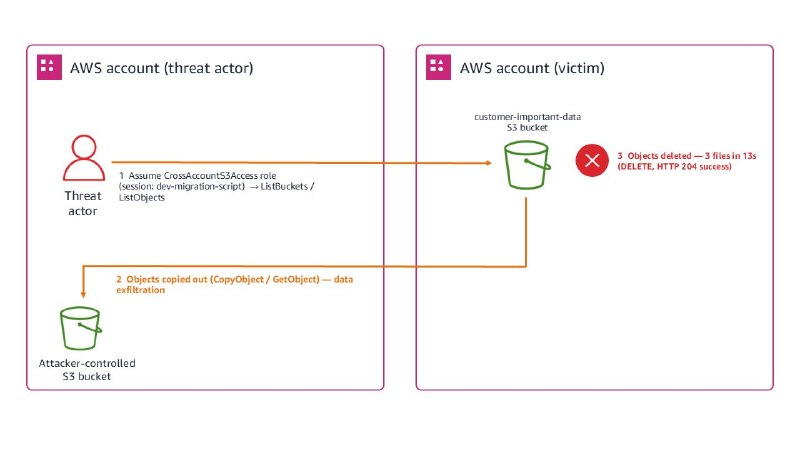 (источник)
● Study Reveals AI Models Are Less Effective at Reviewing Their Own Code An analysis by Greptile, a company developing an AI Code Review agent, investigated how well AI models (Claude Code and Codex) review code written by themselves versus code written by other models. The study, based on 500 pull requests, found that models were slightly better at identifying defects in code generated by different models. It also noted that models are more likely to make an error during development that they subsequently miss during the review process. (источник)
● Bash Script for Basic Service Monitoring with Telegram Notifications Provided
A simple Bash script is available for monitoring services (e.g., nginx, postgresql, redis, ssh) on small projects or development servers. The script uses systemctl is-active to check service status and can send Telegram notifications if a service is found to be inactive. This offers a lightweight alternative to full-fledged monitoring solutions like Zabbix or Prometheus. (источник)
● Webinar Scheduled on Cost Optimization for AI Code Agents
A free webinar on September 18 will address strategies for reducing costs associated with AI agents in coding without compromising code quality. Topics include determining when expensive models are necessary versus when cheaper alternatives suffice, understanding token consumption, delegating tasks to sub-agents, configuring model routing, and best practices for reviewing AI-generated code before merging.  (источник)
Live discussions
No relevant live discussions were identified in the provided chat data for this period.
Social graph
No participant interactions were identified in the provided chat data for this period.
Final analytics
The activity for September 15, 2026, within the Kubernetes & DevOps domain highlighted several key areas. Infrastructure development continues with significant advancements in Kubernetes resource management (Kubernetes 1.36) and the evolution of specialized operating systems like Talos Linux, which is now integrating native hypervisor capabilities. A strong emphasis remains on security, covering container isolation vulnerabilities (Talos Linux pod escape), cloud incident response best practices (AWS CloudTrail), and the emerging challenges of securing AI-driven systems within Kubernetes environments. The intersection of AI and DevSecOps is a notable trend, with discussions around AI's capabilities in code review and the critical need for well-defined guardrails for AI systems. Practical operational tools, such as simple Bash scripts for monitoring, also remain relevant for smaller scale needs. The overall tone is informative and forward-looking, with a clear focus on enhancing performance, security, and efficiency in server infrastructure and development workflows.
Sources
- https://t.me/LearnKubeNews/4449
- https://t.me/kubernative/386
- https://t.me/devops_sre_notes/2741
- https://t.me/Kubesploit/1895
- https://t.me/Kubesploit/1896
- https://t.me/Kubesploit/1897
- https://t.me/cloud_sec/1558
- https://t.me/devsecops_weekly/1568
- https://t.me/devopsslib/5038
- https://t.me/devopsslib/5039