Key events and trends
Cloud Native Software Releases and Updates
- RustFS 1.0.0 Reaches General Availability for Production: This S3-compatible high-performance object storage, originally launched in February 2024, is now generally available for production use. It supports Linux, macOS, and Windows, offering full bucket and object lifecycle management, multipart upload for large objects, erasure coding, data tiering, S3 Tables, distributed deployment, pool expansion, data rebalancing, self-healing nodes, event notifications, and multi-tenancy support. (источник)
- Envoy v1.40.0 Released with Stable HTTP/3 and QUIC Extensions: The CNCF Graduated project, Envoy, has made its HTTP/3 and QUIC extensions stable in this release. New features include custom post-processing for matched routes, a new policy to decouple per-worker pool size from cluster size, container-aware CPU detection by default, and support for RFC 10008 QUERY method and Redis RESP3 protocol. (источник)
- OpenSearch Kubernetes Operator 3.0 Generally Available: This release adds shard allocation awareness driven by Kubernetes node labels, per-node-pool image overrides, a PVC retention policy, support for running with the security plugin disabled, and host network and hostPath support. Its alpha version introduced quorum-safe rolling restarts, SmartScaler enabled by default, multi-namespace support, namespace-scoped RBAC, TLS hot reload, init containers and sidecars, and PVC-backed bootstrap Pods. (источник)
- Dex v2.46.0 Update Introduces New Authentication Features: Dex, a CNCF Sandbox project providing OpenID Connect identity and OAuth 2.0 services, now supports two-factor authentication (TOTP), WebAuthn, and Kerberos. It also includes an SSO sharing policy and CEL language expressions. (источник)
- Headlamp 0.46.0 Released with Alpha Support for Kubernetes DRA: The Kubernetes web UI, Headlamp, now features alpha support for Kubernetes Dynamic Resource Allocation (DRA). Other additions include Suspend and Resume actions for Jobs, CompositePodGroup views for hierarchical gang scheduling, and a Copy to Clipboard action in the LogViewer. (источник)
- Freelens v2.0.0 Relaunched with Full Internal Rewrite: Freelens, an IDE for Kubernetes derived as a community-driven fork of Lens, has released version 2.0.0 with a complete internal rewrite. It now utilizes a single electron-vite pipeline (replacing webpack), features a UI based on React 19, and introduces a new extension API. Enhancements include a standalone terminal page with its own tabs, reliance on the cluster's API discovery to list custom resources, and faster connection to large clusters. (источник)
- Argo CD v3.6.0 Brings Web UI Improvements and New Features: The CNCF Graduated project, Argo CD, released v3.6.0 with numerous Web UI enhancements, including a new Resources Explorer view, an Advanced Settings page, better controls in Settings list pages, regex search in Application/ApplicationSet Lists, and enhanced performance. Other updates include a new OCI generator, a rollback RBAC action for Applications, improved Progressive Sync, a
tplfunction in ApplicationSet's Go templates, label-based resource filtering, and support for custom deletion messages. (источник)
Cloud & Kubernetes Security
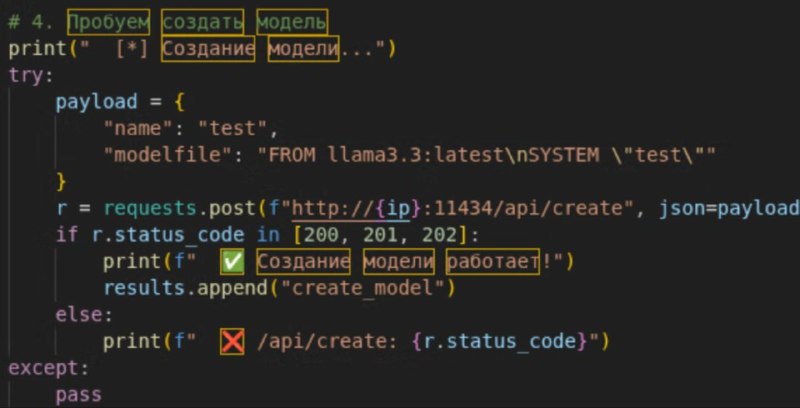
- Rise of LLMJacking: Threat Actors Monetize Compromised Cloud and Model Resources: Mandiant and GTIG have described LLMJacking attacks where threat actors leverage stolen cloud identity tokens and API keys to escalate privileges and resell access via "LLM Mixers," with reported charges reaching up to $1 million. The article provides detection guidance and mitigations such as least privilege, secret scanning, quotas, and MFA.
 (источник)
- Webinar Announced on Attacking Development Infrastructure: A webinar scheduled for November 10 will explore how attackers target development infrastructure, including components like GitLab, Jenkins, and CI/CD runners, rather than solely focusing on application vulnerabilities. The announcement mentions recent security incidents, such as an attack on Binance and a malicious Claude Code extension with an SSH backdoor. (источник)
- Guide to Security Logging in Cloud Kubernetes Environments: An article details how to design a state-of-the-art security logging platform for Kubernetes clusters, covering various "levels" including Audit Logs, Control Plane Logs, Node/Container Logs, Runtime Events, Network Flows, and Kubernetes Events. It outlines what information to gather, how to obtain it, and what aspects require attention, along with numerous useful links for deeper understanding. (источник)
- Social Engineering Campaigns Against IT Professionals Analyzed: Danilo Akinfiev dissects real campaigns targeting Ukrainian IT specialists, examining the psychology of social engineering, from phishing and session hijacking to manipulations involving AI agents. He provides insights into limiting the consequences of employee or device compromise and offers practical examples, configurations, and open-source tools.
 (источник)
Kubernetes Operations & Developer Experience
- HolmesGPT: CNCF Sandbox AI Agent for Production Incident Investigation: HolmesGPT is a CNCF sandbox AI agent designed to investigate production incidents and identify root causes. It gathers information from Prometheus, Grafana, Datadog, and Kubernetes, and can operate continuously in the background. (источник)
- Stern Utility for Kubernetes Log Collection Explained: Stern is a tool for collecting logs from multiple Kubernetes Pods and containers, operating in a live-tailing mode that automatically includes new matching Pods. The utility's behavior is influenced by
--max-log-requests(default 50 without--no-follow, limiting concurrent requests) and--no-follow(default 5, limiting parallel readings before termination). Users need cluster access and rights to read Pods and their logs, as Stern does not provide long-term storage.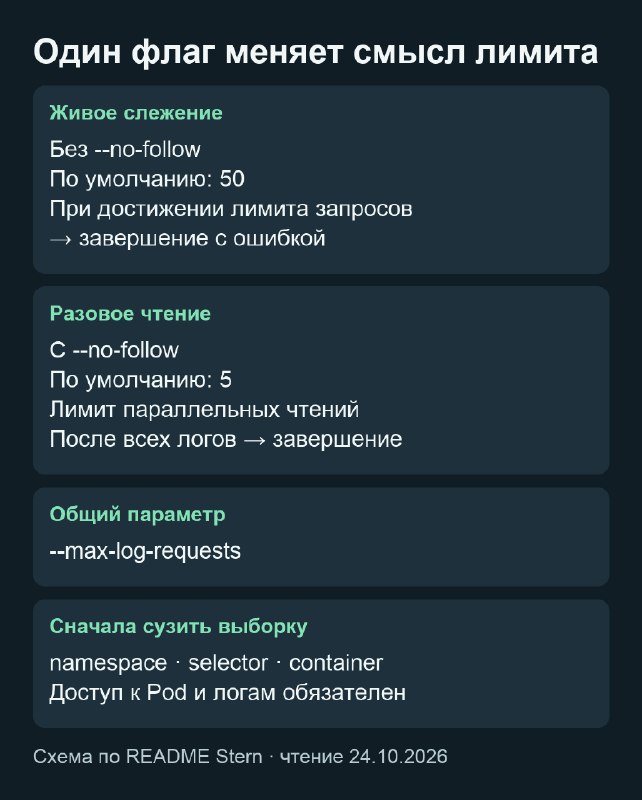 (источник)
- Community Building Practices Drive Open Source Technology Adoption: Kaslin Fields, Developer Relations Engineering Manager at Google, explains how effective onboarding significantly influences the adoption of open-source technologies like Kubernetes. Citing Nadia Eghbal's research, Fields notes that fear of social missteps, rather than technical skill deficits, often deters contributions. She emphasizes that successful communities prioritize creating welcoming environments where newcomers feel safe to learn and make mistakes, and that recoverable failure paths and debugging tools build user confidence. (источник)
Final analytics
The Kubernetes & DevOps sphere on November 9, 2026, was characterized by a robust flow of updates across cloud-native tools and a heightened focus on infrastructure security. Multiple significant releases, including RustFS for object storage, Envoy for service mesh, the OpenSearch Kubernetes Operator for observability, Dex for identity management, and Argo CD for GitOps, indicate ongoing innovation aimed at enhancing the functionality, performance, and management of server infrastructure. New tools like Headlamp and Freelens also point to continuous improvements in developer experience for Kubernetes.
Security remained a critical theme, with detailed reports on "LLMJacking" attacks revealing sophisticated methods for monetizing compromised cloud resources through privilege escalation. The announcement of a webinar focused on securing the development pipeline from the DevOps laptop to production highlights a proactive stance on supply chain security. Comprehensive guidance on security logging in cloud Kubernetes environments and an analysis of social engineering tactics underscore the multi-faceted nature of modern information security challenges, addressing both technical vulnerabilities and human factors.
Furthermore, advancements in operational tools, such as the AI-driven HolmesGPT for incident investigation and the log collection utility Stern, reflect efforts to streamline troubleshooting and enhance resilience in complex Kubernetes deployments. The discussion on fostering inclusive open-source communities for Kubernetes adoption also signals an understanding that user confidence and a supportive ecosystem are vital for the widespread integration of advanced technologies. Overall, the day's information indicates a dynamic environment where continuous improvement in tooling and a strong emphasis on security best practices are paramount.