Key events and trends
● Kubernetes Ready for Databases, Teams Lag in Expertise Kubernetes has largely resolved the technical challenges for running databases and stateful workloads, shifting the primary obstacle to the "people problem"—a lack of team expertise in safe database operations. This highlights a critical need for organizations to invest in database-specific skills for their DevOps and SRE teams to fully leverage Kubernetes' capabilities for stateful applications. (источник)
● SRE and Deep Infrastructure Skills Remain Critical Amid AI/ML Hiring Trends Emily Long, Founder & CEO at Edera, notes a divergence in cloud-native hiring: while AI and ML components are frequently added to job descriptions, essential skills like SRE knowledge and a deep understanding of backend infrastructure remain paramount. She identifies a growing, albeit underappreciated, value in professionals who possess deep insights into the technology stack, urging focus on true operational expertise over "flashy" AI/ML requirements for core infrastructure roles. (источник)
● Kubex: A High-Performance Python Client for Kubernetes
A new Python client for Kubernetes named Kubex, built on Pydantic, offers significant performance improvements. Benchmarks demonstrate that Kubex can list pods tens of times faster and with substantially less memory usage compared to kubernetes-asyncio, enhancing the efficiency of Kubernetes interactions for Python developers. (источник)
● CNCF Welcomes KubeRay and OpenShell as Sandbox Projects The Cloud Native Computing Foundation (CNCF) has accepted two new AI-related projects into its Sandbox:
- KubeRay: A Kubernetes operator and toolkit for orchestrating distributed AI, machine learning, and Python workloads leveraging the Ray framework. Developed by multiple organizations including Anyscale, AWS, ByteDance, Google, and Microsoft.
- OpenShell: Donated by NVIDIA, this runtime is designed for securing and governing autonomous AI agents by managing their behavior and enforcing policy-based boundaries. The project is adopting Cedar as its policy language and moving its repositories to a separate GitHub organization as part of the CNCF transition. This move reinforces the growing importance of AI/ML workload management and security within the cloud-native ecosystem. (источник)
● CloudNativePG Promoted to CNCF Incubating Status CloudNativePG, a Kubernetes operator for managing highly available PostgreSQL clusters, has advanced to CNCF Incubating status. Originating from EDB and accepted into the Sandbox in January 2025, it is now in production with over 50 public adopters, including major enterprises like Akamai, Ericsson, Google Cloud, IBM, Microsoft Azure, and Tesla, underscoring its maturity and widespread adoption for stateful workloads on Kubernetes. (источник)
● NVIDIA Open-Sources Kubernetes Engine for Bare-Metal GPU Infrastructure NVIDIA has released its Kubernetes Engine (NVKE) as Open Source, providing a management plane for creating and operating managed Kubernetes services on bare-metal NVIDIA GPU infrastructure. NVKE facilitates the management of independent workload clusters, node pools, and K8s upgrades. Accompanying NVKE is NVKR (NVIDIA Kubernetes Recipes) for building node images. Both projects are written in Go and available under the Apache 2.0 license. This follows the earlier open-sourcing of Run:ai, an AI workload and GPU orchestration platform for shared AI infrastructure on Kubernetes, further expanding NVIDIA's contributions to AI-optimized cloud-native infrastructure. (источник)
● New kubectl Plugin for Secure Kubernetes Secret Management
kubectl-view-secret is a newly introduced kubectl plugin that streamlines the process of inspecting Kubernetes secrets. It allows users to list secret keys and safely decode their values, providing flexible output options including JSON, YAML, namespace, context, and interactive modes, thereby enhancing security and operational efficiency in managing sensitive data within Kubernetes environments. (источник)
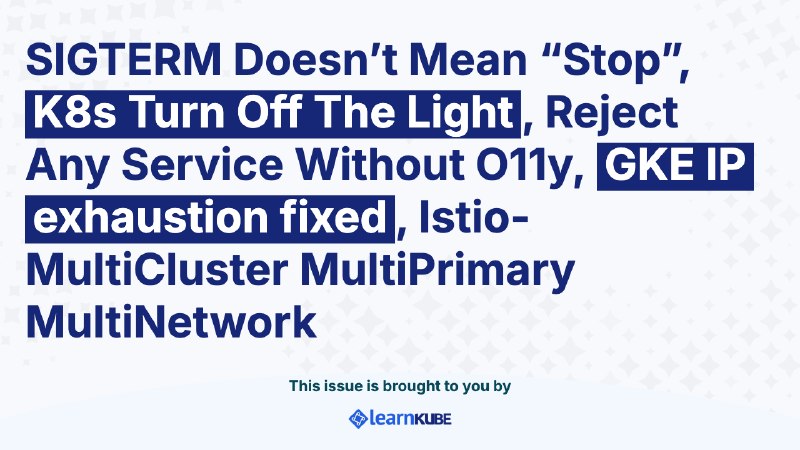
● Learn Kubernetes Weekly 209 Addresses Key Operational and Cloud Topics The latest Learn Kubernetes Weekly issue (209) focuses on reliable Kubernetes operations, featuring articles on:
- The precise meaning of
SIGTERMfor container shutdown. - Kubernetes power management strategies.
- The critical need for observability contracts in CI pipelines.
- A guide for migrating to Class E IP addresses to resolve GKE IP exhaustion.
- Implementation of Istio as a MultiCluster MultiPrimary MultiNetwork Service Mesh on AWS EKS. (источник)
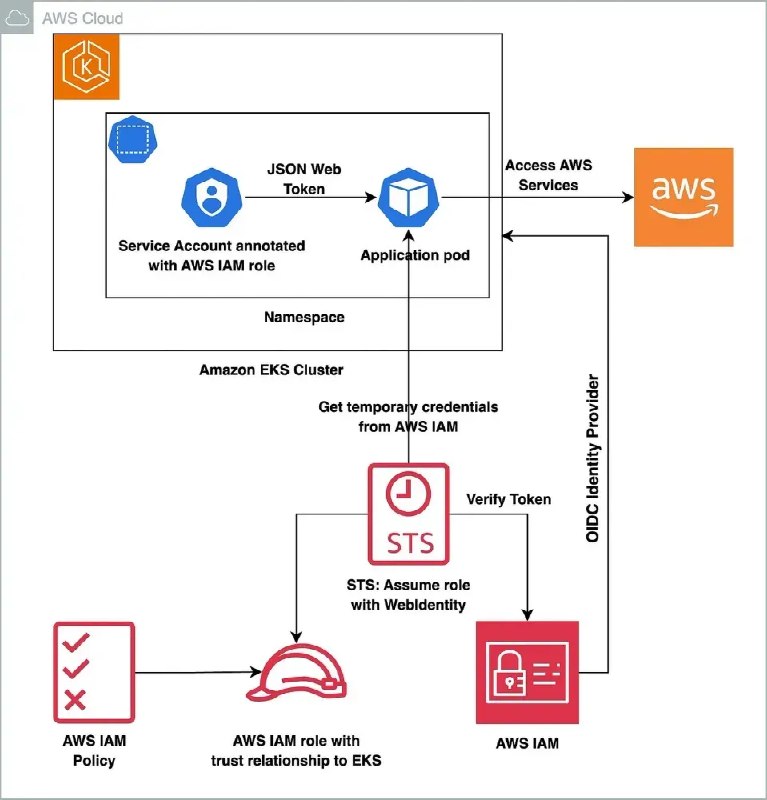
● Deep Dive into AWS EKS Pod Identity and IRSA with Terraform Examples
An in-depth article provides a comparison between IRSA (IAM Roles for Service Accounts) and EKS Pod Identity, detailing how each mechanism grants temporary AWS credentials to pods. The resource includes practical Terraform examples and outlines a migration strategy, which is crucial for secure identity management and infrastructure as code practices on AWS EKS. (источник)
● "Black October" Reveals Widespread Credential Access Incidents on AI Developer Platforms
Wiz reports a "Black October" for AI Developer Platforms, documenting at least nine security incidents in October 2026, primarily stemming from credential access. The incidents involved "LLMJacking" of enterprise keys, leading to significant unauthorized Bedrock API calls (approximately 800k and 1.7M) and the testing of stolen keys by resale operators, highlighting critical vulnerabilities in AI platform security. (источник)
● OWASP Launches Xpsd for AI-Powered Vulnerability Reachability Triage
OWASP has introduced Xpsd, a new project utilizing an LLM agent for reachability triage in vulnerability scans. Xpsd assesses whether input data can trigger vulnerable code identified by compositional analysis, taking CVEs or full reports as input. It integrates with tools like Grype, Trivy, OSV-Scanner, and Snyk, and uses ast-tree and OSV.dev to enrich data, offering a more intelligent approach to prioritizing and mitigating vulnerabilities. (источник)
● AI AppSec Night to Discuss Multi-Agent Systems and AI Security Threats
An "AI AppSec Night" event is scheduled for November 17 in Moscow, focusing on emerging threats in AI security, particularly concerning multi-agent systems. The agenda includes an AI talk show, an intellectual battle on security topics, and themed discussions, aiming to foster debate and knowledge sharing on crucial AI AppSec challenges. Access to the event, both in-person and online, is free with the code 1711. (источник)
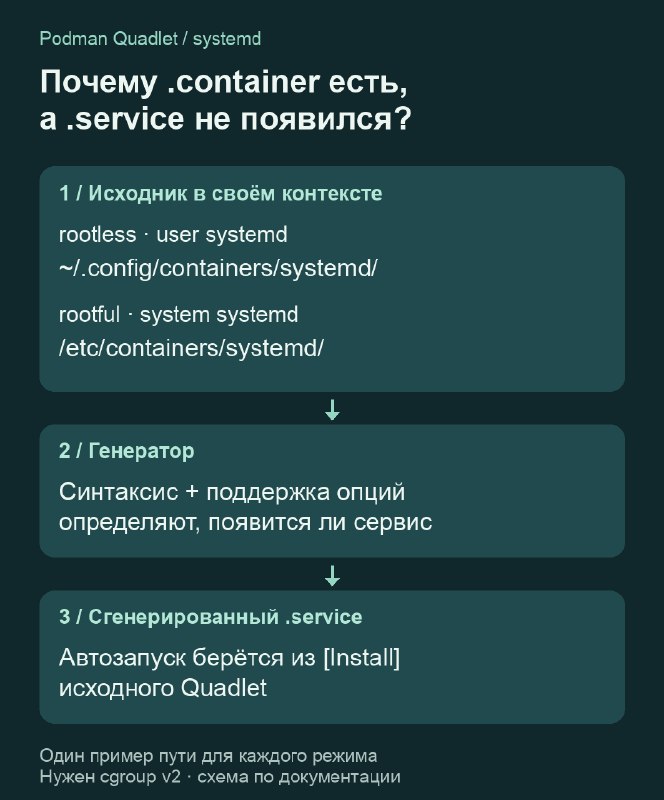
● Quadlet Troubleshooting Guide for Systemd Container Services
A guide on Quadlet outlines troubleshooting steps for when a .container service does not appear. It emphasizes that the .container file must be generated into a .service file by the Quadlet generator. Key troubleshooting areas include checking the source directory, systemd context (rootless vs. rootful), dry-run generator output for syntax errors, and ensuring cgroup v2 is enabled. The guide also clarifies that autostart is set via [Install] in the Quadlet source, and generated units are transient. (источник)
● AI-Powered Automation in CI/CD Slashes Developer Time for Production Releases
Yuri Tymchuk reports significant efficiency gains from integrating AI into CI/CD pipelines. A team of four developers now saves approximately 10 person-hours weekly by automating deployments. This was achieved through automatic sandbox deployments via GitLab CI/CD, followed by the integration of a Claude AI agent to manage production releases, drastically reducing the manual effort and wait times previously associated with feature deployment and production rollouts. (источник)
Live discussions
No significant live discussions were observed in the monitored chat groups for this period.
Social graph
No named participants were observed making contributions in discussions relevant to the main analysis lens for this period.
Final analytics
The observed discussions on November 11, 2026, within the Kubernetes & DevOps community highlight a strong focus on advancements in infrastructure, particularly around AI/ML integration, and persistent challenges in security and operational expertise. A notable trend is the increasing maturity of Kubernetes for stateful applications like databases, though this is tempered by the recognition that human expertise is now the bottleneck, rather than technical capability. The open-sourcing of NVIDIA's Kubernetes Engine for bare-metal GPU infrastructure and the progression of CloudNativePG to CNCF Incubating status exemplify the drive towards more specialized and robust infrastructure solutions.
Security remains a paramount concern, with the "Black October" report on AI developer platform incidents underscoring the severe risks associated with credential access and LLMJacking. The introduction of OWASP Xpsd, an AI-powered tool for vulnerability reachability analysis, reflects the industry's proactive approach to combating these evolving threats, especially in the context of AppSec and DevSecOps. Tools like kubectl-view-secret and the discussion around IRSA/EKS Pod Identity further emphasize the community's commitment to secure configurations and identity management within cloud-native environments.
A significant gap observed for this period is the near absence of direct community discussions or reactions in the monitored group chats to the wealth of news reported in channels. This could indicate several factors: a quiet day for active chat participation, a focus on internal work rather than public commentary, or perhaps a preference for asynchronous consumption of news rather than immediate discussion. The lack of direct interaction means a key source for "community pulse" and "live discussions" could not be leveraged, limiting insights into collective sentiment, practical advice, or emerging conflicts regarding the reported events. Despite this, the channel content alone paints a clear picture of an industry rapidly innovating in infrastructure and security, with a strong emphasis on automation and AI's role in both operations and threat landscapes.