Key events and trends
● OpenTelemetry Collector capabilities highlighted for observability pipelines. The OpenTelemetry Collector is presented as a tool that efficiently receives, cleans, batches, and sends traces, metrics, and logs. It supports data flow between applications and various observability tools, emphasizing vendor independence (source).
● Microsoft 365 prolonged incident postmortem reveals critical insights. A preliminary postmortem report detailed a recent prolonged incident for Microsoft 365. Key findings include a defect from a fix for networking gateway servers, inadequate load testing that missed latent issues due to differing production/test traffic and SKU mixes, a concurrent 14% server capacity outage, and automated recovery processes failing to restore service from a broad unresponsive state. The analysis raised concerns about the testing environment's fidelity to production and the absence of traffic shaping for recovery at Microsoft's scale (source).
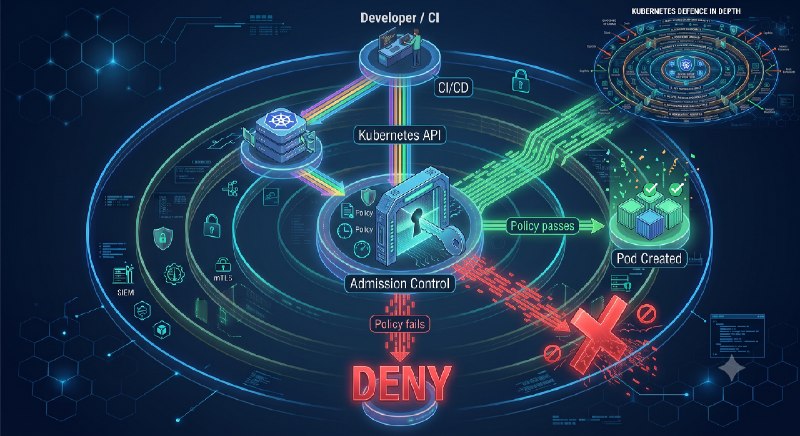
● Article outlines Kubernetes defense-in-depth strategies.
A new article explains comprehensive Kubernetes defense-in-depth approaches. It covers securing container images, configuring pod settings, implementing network policies, using admission controls, and hardening nodes to ensure that a failure in one security layer does not compromise the entire cluster (source).
● LLMs demonstrate incorrect patterns in AWS IAM policy generation.
An analysis highlighted common errors made by AI agents when generating AWS IAM policies. These include the superfluous addition of Deny statements in identity policies, misapplication of permissions boundaries as generic restrictions, and the unnecessary inclusion of sts:GetCallerIdentity in policy documents (source).

● Vexproof solution released for Python vulnerability reachability analysis. A new solution, Vexproof, has been developed to analyze vulnerability reachability within Python dependencies. Its design priorities included generating verifiable evidence, preventing execution of untrusted code, ensuring deterministic verdicts, and being extensible to other programming languages. Vexproof operates in three stages: information gathering, identifying vulnerable calls, and reachability verification, utilizing a hybrid approach including Muse Spark. The accompanying article provides architectural details, operational modes, installation steps, and key design decisions (source).
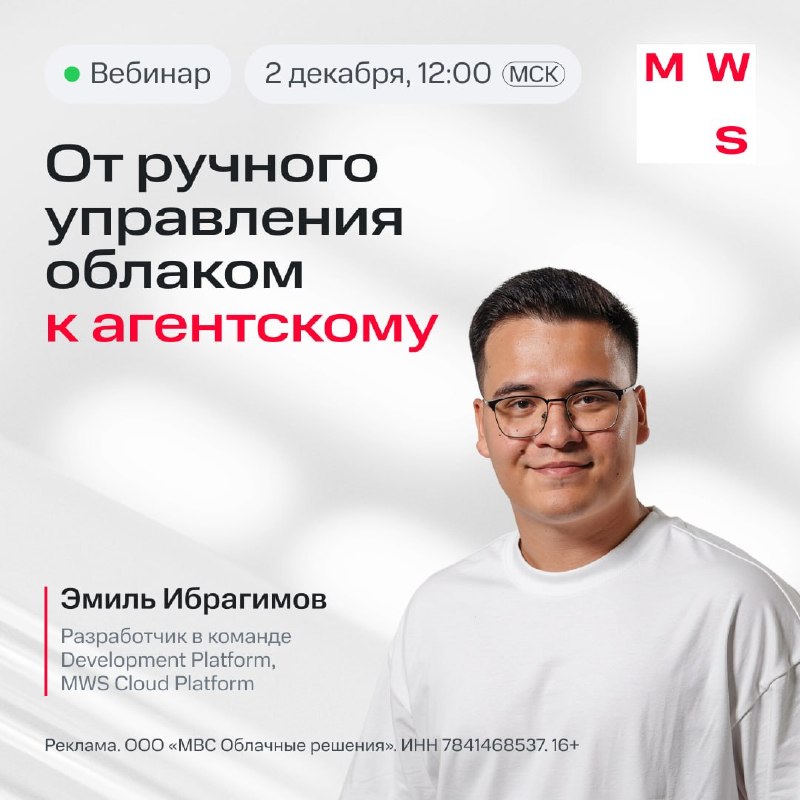
● Webinar announced on automating cloud infrastructure management with AI agents.
A practical webinar, scheduled for December 2nd at 12:00, will focus on automating cloud infrastructure management using AI agents. The session will cover tasks suitable for AI delegation in the cloud, connecting AI agents like Claude, Codex, and Cursor to manage infrastructure, and verifying AI-generated results with Infrastructure as Code (IaC). A live demonstration will show an AI agent deploying a Minecraft server on MWS Cloud Platform and converting its configuration to IaC (source).
● systemd 254+ introduces stepped delay for service restarts.
systemd versions 254 and newer now support a gradual increase in restart delays for services through RestartSteps up to a RestartMaxDelaySec limit. This feature aims to prevent rapid, consecutive restarts during service failures. For instance, RestartSec=10s, RestartSteps=4, and RestartMaxDelaySec=160s would result in restart pauses of 10, 20, 40, 80, and 160 seconds. Proper configuration requires a positive RestartSteps, non-zero RestartSec, and a finite RestartMaxDelaySec (source).
● Kuber Conf, a community Kubernetes conference, announced for November 23rd in Moscow. The non-commercial Kuber Conf will be held on November 23rd in Moscow, bringing together engineers working with Cloud Native approaches in production environments. The program includes discussions on Kubernetes on bare metal, developer platforms, incident diagnostics, workload isolation, and the application of AI in infrastructure. A discount code, "DEFLOPE," is available for subscribers (source).
Live discussions
No relevant live discussions were recorded during this period.
Social graph
No participant data is available for analysis during this period.
Final analytics
The activity on November 20, 2026, primarily consisted of informative posts from various channels, focusing on key areas within server infrastructure, security, and DevOps practices. A significant theme was the increasing integration of AI into infrastructure management and security, highlighted by discussions on LLM errors in AWS IAM and a webinar promoting AI agents for cloud automation. DevSecOps continued to be a central topic, with a new tool for Python vulnerability analysis and strategies for Kubernetes defense-in-depth. Reliability and incident management were also addressed through a Microsoft 365 postmortem and new systemd features for service restarts.
The overall tone of the day was highly factual and educational, with announcements of new tools, practical guides, and critical incident analyses. A notable information gap is the complete absence of community discussions or reactions, as no messages from group chats were available for analysis. This lack of interaction means there are no recorded agreements, disputes, or emergent questions from the community. Consequently, it's not possible to gauge the immediate community sentiment or identify specific challenges users are facing related to these news items. The potential consequence of this observed data is that while the community is being fed relevant information, there's no visible real-time discourse or collaborative problem-solving captured within this monitoring window.