Key events and trends
● New API Security Checklist Released for Developers A comprehensive API Security Checklist is now available, offering a set of over 40 requirements and recommendations to enhance API security. The checklist is organized into key areas: Authentication, Access, Authorization, Processing, and Continuous Build, and is available in multiple languages. (Source)
● TokenTimer Tool Launched for Centralized Secret and License Management TokenTimer is a new tool designed to track certificates, tokens, secrets, and licenses from a single interface. It provides alerts before expiry and supports automatic renewals across various connected providers, enhancing security and operational efficiency. (Source)
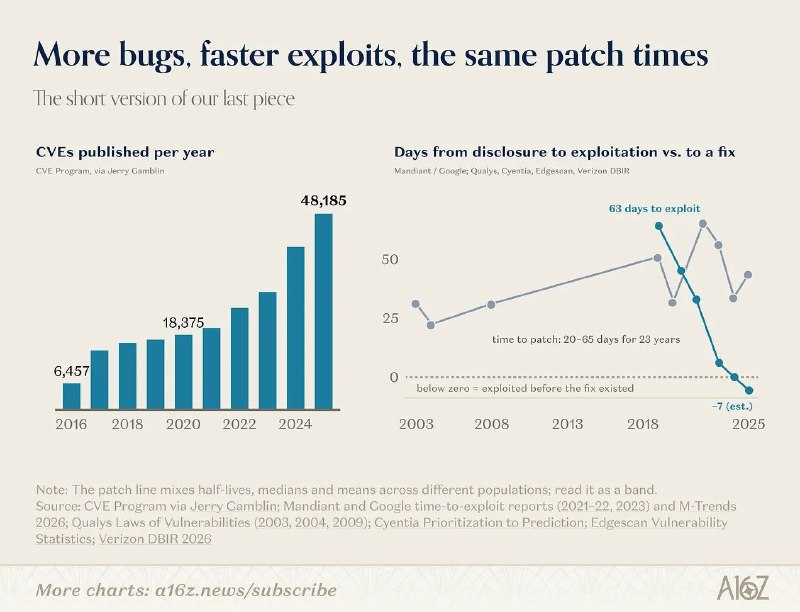
● a16z Advocates for Rebuilding Defense-in-Depth for Machine-Speed Exploits
With AI-built exploits now outpacing traditional patching methods, a16z suggests a strategic shift in defense-in-depth. Recommendations include removing exposure, segmenting networks, blocking attacks at the network layer, eliminating bug classes, and proving backup restoration capabilities. The report outlines six opportunities for new defenses, such as live fixes and rule-free detection. (Source)
● Real-Cluster Tests Uncover Bugs in Kubernetes Repair Agent Safety Checks An article details how repeated testing on live Kubernetes clusters exposed critical bugs in a Kubernetes repair agent's safety checks. The findings highlight the significant effort required to verify the safety of GitOps pull requests. (Source)
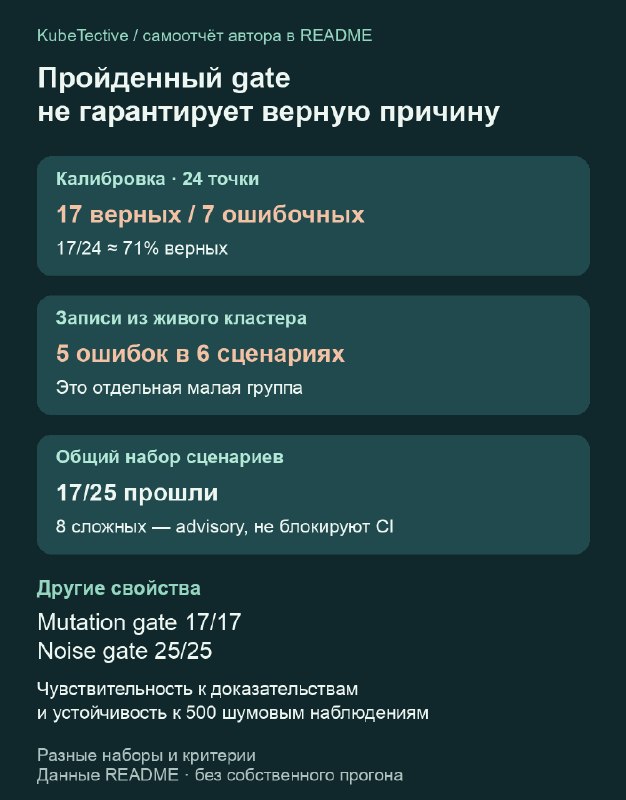
● KubeTective Kubernetes Incident Diagnostic Tool Shows Significant Errors in Tests
Analysis of the KubeTective Kubernetes incident investigation tool's README reveals that it reports 7 errors out of 24 calibration points, achieving approximately 71% correct answers. In a separate set of six scenarios recorded from a live cluster, the engine made mistakes in five, including cases involving a missing Secret and a liveness probe with insufficient CPU. While the tool's sensitivity and noise robustness checks pass, these do not validate the correctness of its diagnostic verdicts. The author retains failed cases for calibration, offering a useful example of diagnostic reporting practices rather than an endorsement of the tool's immediate reliability. (Source)
● Rootly Highlights Safe Kubernetes Incident Workflows and Guarded Actions
Sylvain Kalache from Rootly emphasizes that during an outage, the objective is not to make every responder a Kubernetes expert but to establish safe initial steps before an incident occurs. He advocates for standardizing data collection, surfacing relevant dashboards and queries, and transforming risky Kubernetes actions into guarded buttons instead of direct kubectl commands. (Source)
● Operational Intuition Critical for AI in Incident Diagnosis, Beyond Telemetry Sylvain Kalache from Rootly argues that while telemetry (logs, metrics, traces, deploy history) is essential, operational intuition developed by experienced engineers is crucial for effective incident diagnosis. AI tools require sufficient context to approximate this human judgment, as intuition often guides where failures originate. (Source)
● Article Maps AI Inference Stack with Kubernetes and Metrics Focus A new article provides a detailed mapping of the AI inference stack, covering components from gateways and GPUs to engines, KV caches, routing, distributed serving, Kubernetes, and the metrics essential for explaining token latency. (Source)
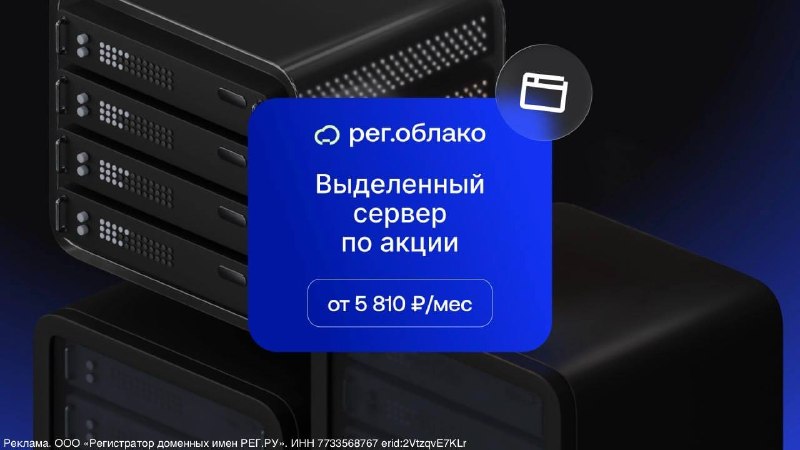
● Reg.cloud Offers Budget Infrastructure for CI/CD and Virtual Machines
Reg.cloud is promoting budget-friendly server configurations on Xeon E5 processors, suitable for CI/CD, custom hypervisors, or multiple virtual machines. An example configuration includes dual Xeon E5-2640, 64 GB RAM, two 480 GB SSDs, and two 2 TB HDDs, available for approximately 13,720 ₽/month on promotion, down from a regular 19,600 ₽/month. This setup is recommended for multi-threaded tasks, demanding databases, and corporate systems. Free migration and BitrixEnv installation are included. (Source)
Live discussions
No significant live discussions relevant to the core topics were identified for this period.
Social graph
No participants were identified through relevant discussions for this period.
Final analytics
The activity on November 16, 2026, primarily focused on advancements and best practices in server infrastructure security and operational efficiency within Kubernetes and DevSecOps ecosystems. Key trends indicate a growing emphasis on proactive security measures, with new tools like TokenTimer addressing secrets management and a comprehensive API Security Checklist providing practical guidance. The strategic discussion from a16z underscores a shift towards more resilient defense-in-depth strategies to counter rapidly evolving AI-driven exploits, highlighting the need for defenses that operate independently of quick patching cycles.
Operational insights were prominent, particularly concerning Kubernetes incident response. The discussions from Rootly emphasized the importance of structured incident workflows and guarded actions to enhance safety during outages, recognizing that operational intuition complements telemetry data for effective diagnosis. A critical analysis of the KubeTective diagnostic tool revealed its current limitations, suggesting that while automated diagnostics are crucial, their output requires careful validation. The technical articles also touched upon the integration of Kubernetes in advanced AI inference stacks and the cost-effective provisioning of infrastructure for CI/CD and VMs, indicating continued interest in optimizing underlying compute resources.
The emotional tone of the day's content was largely informative and analytical, with a focus on problem-solving and strategic thinking. There were no apparent information gaps within the reported news, as various facets of infrastructure, security, and operations were covered. However, the complete absence of community discussions means that potential real-world challenges, diverse opinions, or practical applications that would typically emerge from user interactions were not captured. This lack of pulse from the community could signify a quiet day or a disconnect between published news and immediate user engagement, leaving the practical consequences and adoption rates of these innovations unverified within the group context.