Key events and trends
-
Kubernetes Non-Core Security Audit Reveals 19 Defects The Kubernetes Security Special Interest Group (sig-security) commissioned an independent security audit of non-core Kubernetes components, conducted by Shielder. The comprehensive 96-page report details 19 security defects of varying criticality, including a High-severity Path Traversal vulnerability in Cluster API Flavor Template Generation, a Medium-severity bypass of PSS AppArmor Policy, and a High-severity Command Injection issue in Image Builder. The report provides detailed descriptions, source code references, potential impact, attack complexity, Proof-of-Concepts, and remediation recommendations for each finding. (источник)
-
AWS Introduces Nitro Sandboxes for Enhanced EKS Pod Isolation AWS Nitro Sandboxes are now available across Amazon EKS, ECS, and EC2. This feature integrates Firecracker-based microVMs with their own guest kernel into sandboxed Pods via a
runtimeClassName: isolated-sandboxconfiguration setting. This provides an additional layer of isolation, particularly beneficial for workloads such as AI agents. (источник) -
Isola Launches Kubernetes Sandboxes for Untrusted Code Execution Isola has introduced self-hosted Kubernetes sandboxes designed to safely run untrusted or AI-generated code. These sandboxes leverage gVisor isolation and offer controlled networking, restricted file access, specific command APIs, and reusable filesystem snapshots for enhanced security. (источник)
-
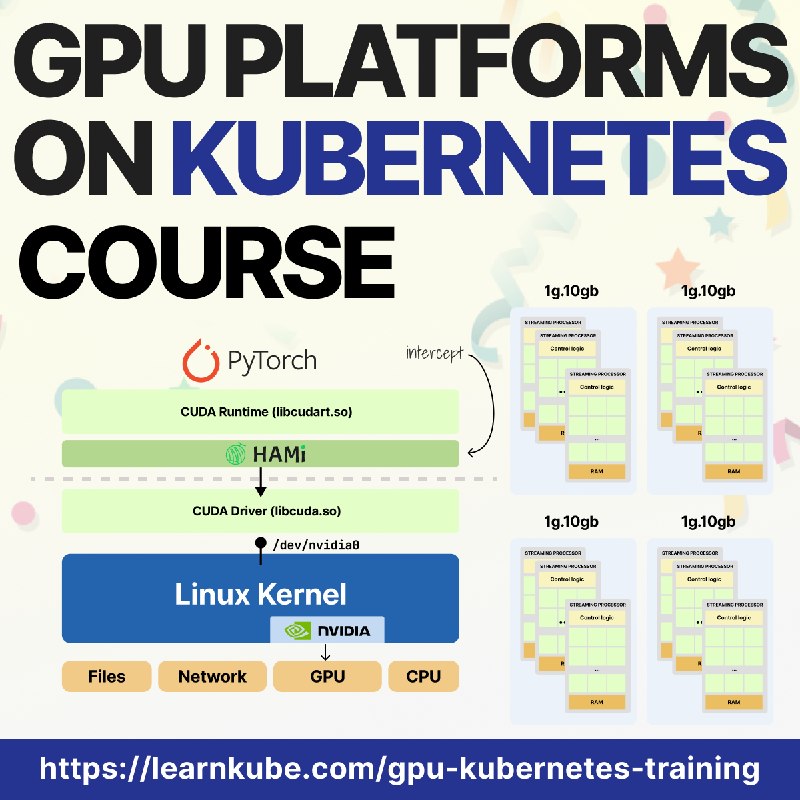
NVIDIA and LearnKube Announce GPU Platform Course on Kubernetes NVIDIA unveiled the NVIDIA Kubernetes Engine (NVKE) at KubeCon this week. Concurrently, LearnKube announced a new instructor-led course, "Building GPU Platforms on Kubernetes." The four-day curriculum covers Kubernetes fundamentals, architecture, networking, and scheduling, with a dedicated focus on NVIDIA GPUs and NVKE. It delves into GPU access tracing, compares time-slicing, MPS, and MIG, and connects DCGM metrics to application throughput. (источник)
-
Kubernetes 1.37 Unveils Advanced Scheduling Features Kubernetes version 1.37 introduces several new features aimed at improving the management of distributed workloads. These include gang scheduling, workload-aware preemption, CompositePodGroups, advanced topology rules, shared ResourceClaims, and new controller APIs. (источник)
-
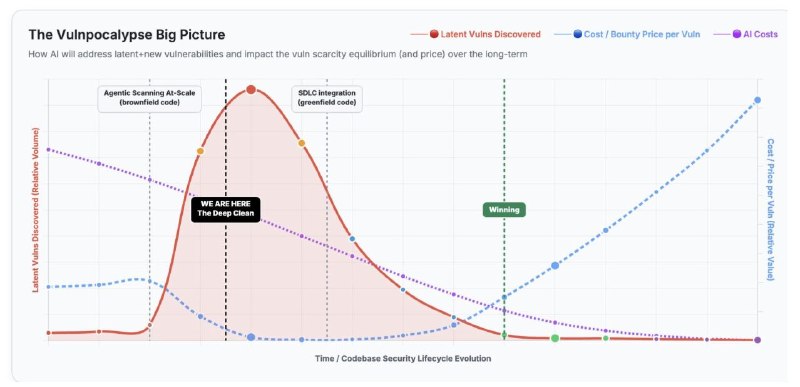
"The Vulnpocalypse": AI-Driven Vulnerability Surge Challenges Organizations The security landscape is experiencing a "Vulnpocalypse," characterized by a significant increase in newly discovered vulnerabilities, largely due to advancements in AI tooling. While some organizations are enhancing their speed, prioritization, and defense-in-depth strategies to manage this influx, many others are not, leading to a backlog of unaddressed software, configuration, and policy vulnerabilities from previous years. (источник)
-
Positive AppSec Conf to Address AI, Supply Chain, and Scanner Effectiveness The Positive AppSec Conf, scheduled for November 18 in Moscow (with an online broadcast), will address critical topics in application security. Discussions will cover vulnerabilities in AI-generated code, the practical efficacy of SAST/DAST/IaC scanners beyond compliance, supply chain and open-source library attacks, the shift from counting vulnerabilities to assessing exploitability and business risk, and strategies for justifying AppSec budgets. (источник)
-
GCP Incident Postmortem Analyzes Cloud Reliability A postmortem report for a recent Google Cloud Platform (GCP) incident, which impacted several dependent services, has been released. The analysis is complemented by a writeup on reliability by Lorin Hochstein. (источник)
-
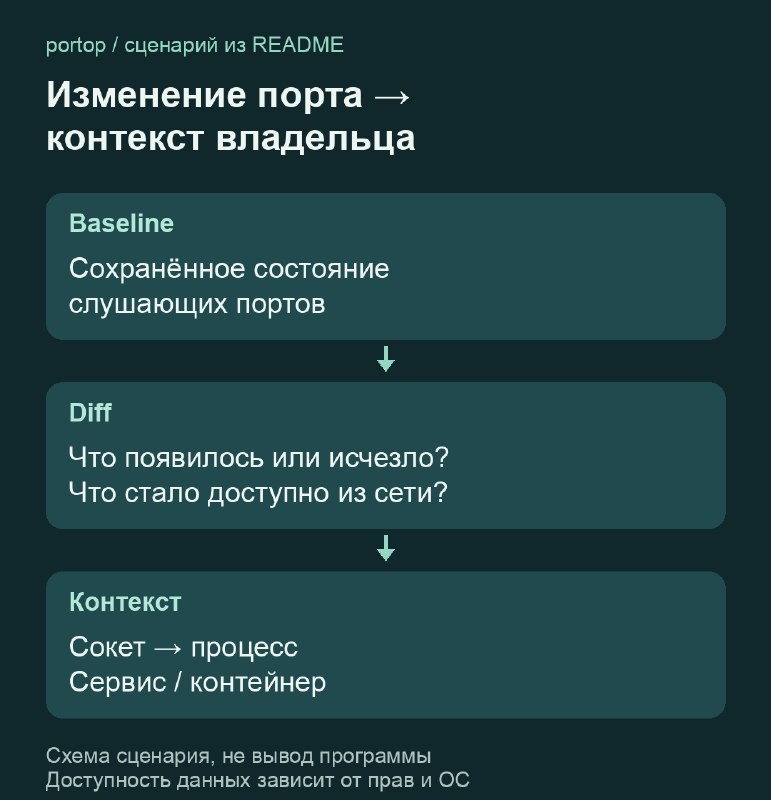
New Tool 'portop' Monitors Post-Deployment Port Changes 'portop' is a new tool designed to monitor and report changes in listening ports after deployments. It correlates socket, process, systemd unit or Windows service, and Docker, Podman, or Kubernetes container data. The tool allows for baseline comparisons to identify newly opened, closed, or network-accessible ports, providing an exit code (3) for differences, which can be integrated into CI pipelines. (источник)
-
Linkerd Documentary "The Linkerd Story" Released "The Linkerd Story: The People Behind the Service Mesh," a documentary focusing on the CNCF project Linkerd, premiered during KubeCon NA 2026 and is now publicly available on YouTube. The film features interviews with Chris Aniszczyk, William Morgan, Christian Hüning, William Rizzo, and Alex Leong, chronicling Linkerd's journey since its inception in 2010. (источник)
Live discussions
No relevant live discussions were found within the specified period.
Social graph
No participants contributed to discussions relevant to the core topics within the specified period.
Final analytics
The day's activity was predominantly channel-driven, showcasing a strong emphasis on the evolution and security of server infrastructure. Key trends include significant advancements in Kubernetes, with version 1.37 introducing new scheduling capabilities for distributed workloads and new offerings like NVIDIA Kubernetes Engine (NVKE) for GPU platforms. The focus on container security is evident through AWS Nitro Sandboxes and Isola's Kubernetes sandboxes, both designed to enhance isolation for untrusted or AI-generated code.
A critical theme for the day is the escalating challenge of cybersecurity. The "Vulnpocalypse" highlights how AI tooling is increasing the volume of discovered vulnerabilities, demanding faster and more strategic responses from organizations. This concern is further amplified by the detailed Kubernetes non-core security audit, which uncovered numerous defects requiring remediation. The upcoming Positive AppSec Conf also underscores the industry's need to address AI-generated code vulnerabilities, supply chain risks, and effective AppSec strategies.
While the day presented a wealth of technical information and insights into new tools like 'portop' for monitoring, the absence of group discussions suggests a period of information consumption rather than active debate or collaborative problem-solving within the community. The lack of interactive dialogue means there are no community-driven insights or resolutions to report for this period. This might indicate that the content provided by channels is primarily for awareness and individual study, or that discussions occur in private settings not captured here.