Key events and trends
● Kubernetes Evolution for AI and Machine Learning Workloads Taylor Dolezal, Head of OSS @ Dosu, highlighted how Kubernetes has adapted over the past 2-3 years to support AI and machine learning workloads, including GPU scheduling, inference, and batch processing. Key priorities for the next decade include continued focus on automation, sane defaults, improved developer experience, and optimizing workloads, workflows, storage, and application runtime. (источник)
● New Critical Vulnerability "Terminal2Shell" Discovered Across Major Operating Systems A newly discovered 55-year-old vulnerability, dubbed "Terminal2Shell," affects macOS, Windows, and Linux, granting instant shell access. The exploitation is described as trivial, requiring no special tools, and no patch currently exists. (источник)
● KubeAPT Tool for Validating Kubernetes Admission Controls KubeAPT is a new tool designed to check the effectiveness of Kubernetes admission controls, including ValidatingAdmissionPolicies, Pod Security Admission, and reusable policy bundles, in blocking unsafe workloads. (источник)
● HolmesGPT: A CNCF SRE Project for AI-Driven Observability and Incident Response HolmesGPT is an AI agent focused on observability and aiding in incident response within SRE. It integrates with a wide range of systems for metrics (Prometheus, Datadog), logs (Loki, Elasticsearch), traces (Tempo), dashboards (Grafana), infrastructure (Kubernetes, Docker, Helm, ArgoCD, OpenShift), CI/CD (Jenkins), databases, and messaging queues (Kafka). The agent operates in read-only mode to gather context, alert on incidents, and provide recommendations for issue resolution. Benchmarks are provided to help users choose suitable models based on tests, cost, performance, and skill correctness. (источник)
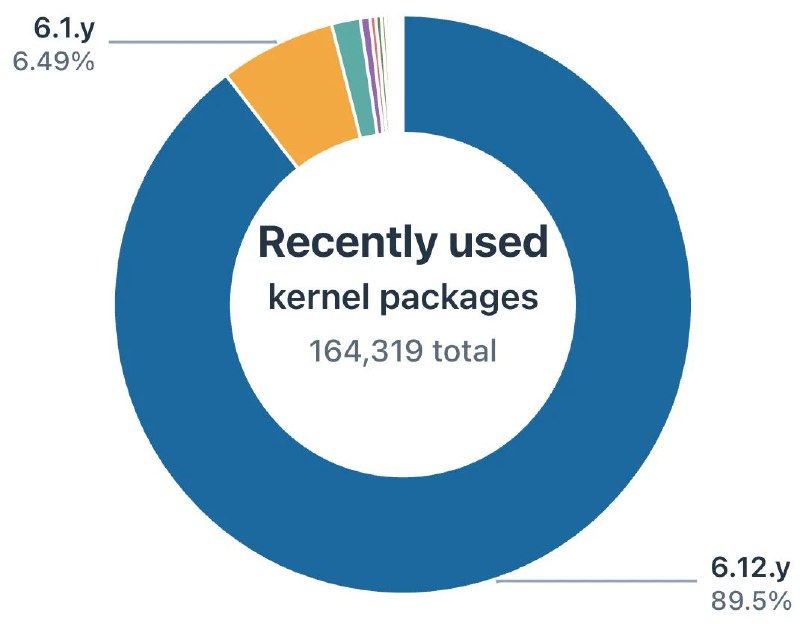
● AI-Powered Backporting of Linux Kernel Security Fixes with Codex
Trail of Bits is utilizing AI agents named Codex to automate the process of backporting security fixes to stable Linux branches. These agents identify missing fixes, adapt patches, run tests, and prepare submissions for review by engineers, significantly reducing human effort to 30 minutes – 3 hours per fix. To date, 149 CVE fixes have been successfully landed in stable kernels using this method.
 (источник)
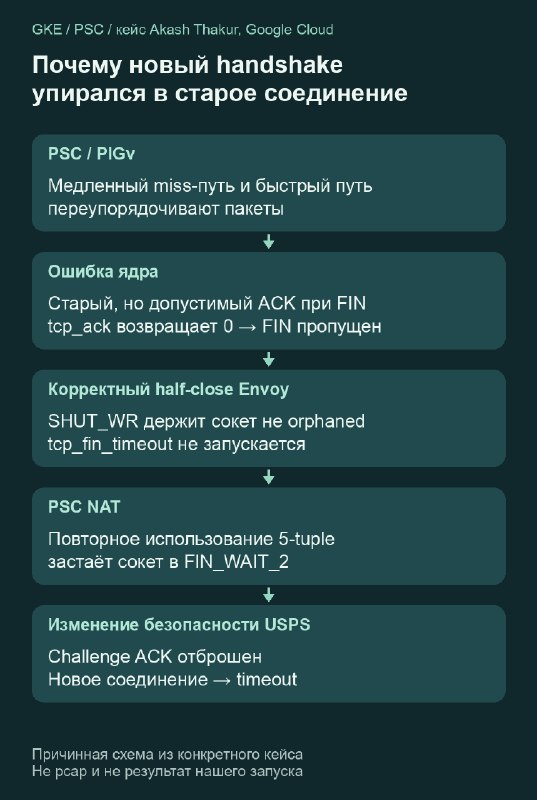
● Google Cloud's Analysis of TCP Connection Failures in GKE
Akash Thakur from Google Cloud detailed a complex incident where GKE pods intermittently failed to connect to the Kubernetes API via Private Service Connect. The root cause was identified as a combination of packet reordering on PIGv, a Linux 6.1 kernel bug preventing proper FIN processing, and Envoy's half-close behavior. This combination kept sockets open, allowing PSC NAT reuse of 5-tuple connections, leading to challenge ACKs disrupting new handshakes. The issue was mitigated by rolling back USPS changes and fixing challenge ACK processing in the kernel/COS. The investigation highlighted the importance of simultaneous packet captures at multiple points.
 (источник)
Live discussions
No significant live discussions were observed in the group chats that were not directly tied to specific news items, or which fell outside the defined scope.
Social graph
- @Taylor Dolezal (forwarded by @LearnKubeNews): Expert, discussing Kubernetes evolution for AI/ML.
- @CatOps: Initiator, announcing the Terminal2Shell vulnerability.
- @Kubesploit: Initiator, announcing the KubeAPT tool.
- @cloud_sec: Initiator, sharing information on AI-powered security fix backporting.
- @devsecops_weekly: Initiator, introducing the HolmesGPT SRE project.
- @devopsslib: Initiator, sharing a detailed technical analysis from Google Cloud (Akash Thakur).
Final analytics
The day's content highlights a strong and evolving focus on Kubernetes, not just as an orchestration platform but as a critical foundation for advanced workloads like AI/ML, emphasizing automation and improved developer experience. A significant security concern emerged with the "Terminal2Shell" vulnerability, affecting major operating systems and posing an immediate threat to server infrastructure given the absence of a patch. This underscores the continuous need for robust security practices.
In response to complex security and operational challenges, AI is increasingly being leveraged in both DevSecOps and SRE. Tools like KubeAPT provide specific Kubernetes security validation, while broader initiatives like HolmesGPT and the Codex project by Trail of Bits demonstrate AI's potential in automating observability, incident response, and the critical task of backporting security fixes at scale. These developments signal a trend towards more intelligent, automated, and proactive approaches to maintaining secure and stable server infrastructures. The detailed analysis of a GKE TCP connection failure further illustrates the intricate technical depths involved in cloud-native operations and the importance of deep-level troubleshooting.
The overall tone of the discussions was highly technical and solution-oriented, reflecting the group's professional focus. The absence of active discussions in the provided chat data suggests that participants primarily consumed information from channels or engaged in private conversations, rather than public group discourse on these specific topics during the observed period.