Key events and trends
● Kubernetes 1.37 introduces enhanced scheduling capabilities The latest Kubernetes release, version 1.37, includes features such as gang scheduling, workload-aware preemption, and hierarchical PodGroups. This aims to improve how workloads are managed and resources are allocated within clusters, optimizing performance and resource utilization (источник).
● Comparison and migration path for IRSA vs. EKS Pod Identity A detailed analysis was provided covering the credential flows, Terraform examples, and a migration path for integrating IRSA (IAM Roles for Service Accounts) and EKS Pod Identity. This helps users understand and choose between different approaches for secure identity management in Kubernetes on AWS (источник).
● SafetyCulture's migration from Helm to GitOps with Argo CD Andrew, Staff Cloud Infrastructure Engineer at SafetyCulture, shared insights on migrating 250-300 applications across 20 teams from Helm to GitOps using Argo CD. He highlighted the critical role of change management in overcoming initial resistance and demonstrating real value to engineering teams (источник).
● Spinifex's journey to a self-hosted AWS-compatible platform with EKS on K3s An article detailed how Spinifex developed its self-hosted AWS-compatible platform, leveraging EKS on K3s, custom load balancers, containers, databases, IAM, storage, and achieving production-tested reliability (источник).
● Kubernetes operator for efficient off-hours workload scaling A case study presented the development of an off-hours Kubernetes operator designed to scale workloads down and restore them later. The operator optimizes memory usage through filtered API reads (источник).
● Proof-of-concept scripts released for NGINX HTTP/2 integer underflow vulnerability (CVE-2026-123007) Proof-of-concept (PoC) scripts have been made public for CVE-2026-123007, an integer underflow vulnerability discovered in NGINX HTTP/2. This highlights a critical security concern for systems using NGINX (источник).
● Critical Java4Shell vulnerability (CVE-2026-114938) disclosed in OpenJDK's Base64 decoder A critical memory-corruption vulnerability, named Java4Shell (CVE-2026-114938), was disclosed in OpenJDK's Base64 decoder, scoring 9.2 out of 10 on CVSS 4.0. OpenJDK is widely used, and Oracle has already released a patch for this "write once, RCE everywhere" vulnerability (источник).
● AKS workload identity federation using Azure Workload Identity Federation A case study demonstrated replacing an AKS workload's Azure client secret with Workload Identity Federation. This method maintains existing application identity and Key Vault permissions while eliminating the need for manual password rotation (источник).
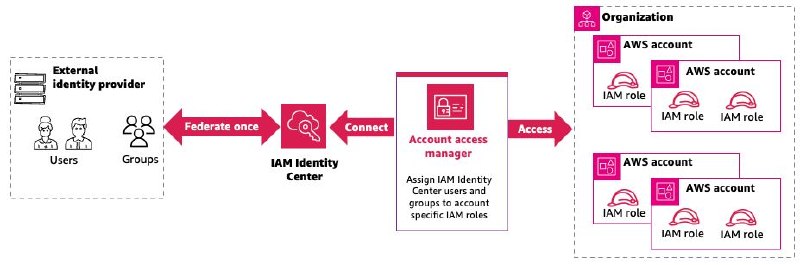
● AWS introduces Account Access Manager for centralized IAM role management
AWS has launched Account Access Manager, a service that enhances IAM role flexibility. It allows assigning existing IAM roles from individual accounts to Identity Center users and groups, providing centralized federation and user-level audit visibility while retaining ABAC and trust-policy conditions (источник)
● Deep dive into Kubernetes networking models and CNI specifics Two articles explored the fundamental concepts of Kubernetes networking, including the "IP per pod" rule, Linux Network Namespaces, the role of pause containers, and CNI (Container Network Interface). The second article detailed the CNI contract, commands, container creation network setup, and conceptual differences in CNI implementations like Flannel, Calico, and Cilium (источник).
● k8s-guardian tool for Kubernetes manifest validation against real cluster state
Platform Engineer Andriy Zhukovskyy introduced k8s-guardian, a tool designed to validate Kubernetes manifests by considering the real state of a cluster. This addresses issues where manifests pass static checks but fail deployment. The tool was tested on 30 popular Helm charts, revealing practical errors (источник).
Live discussions
No significant live discussions were observed in the monitored groups for this period.
Social graph
No notable participant interactions or roles were identified from discussions during this period.
Final analytics
The day's information flow for the Kubernetes & DevOps community was heavily focused on platform enhancements, infrastructure management, and critical security updates, primarily originating from dedicated news channels. Key developments included new features in Kubernetes 1.37 aimed at optimizing workload scheduling, and strategic approaches to cloud identity and access management, such as the comparison of IRSA and EKS Pod Identity on AWS, Azure Workload Identity Federation, and the new AWS Account Access Manager. Significant attention was also given to practical DevOps practices, with a case study on migrating applications to GitOps with Argo CD and the architectural details of a self-hosted AWS-compatible platform.
Security remained a top concern, highlighted by the disclosure of two critical vulnerabilities: CVE-2026-123007 in NGINX HTTP/2 and the severe Java4Shell (CVE-2026-114938) affecting OpenJDK. These revelations underscore the continuous need for vigilance in patching and secure coding practices within server infrastructure components. Additionally, the introduction of tools like k8s-guardian indicates a growing trend towards more robust validation and reliability in Kubernetes deployments, moving beyond static checks to consider the actual cluster state.
The overall tone was informative and practical, providing actionable insights for professionals managing complex server infrastructures. There was a notable absence of community discussions or reactions, suggesting either a day with less interactive engagement or that the shared news did not provoke immediate debate within the monitored chat groups. The primary information gap was the lack of direct community feedback or deeper analysis from the practitioners on these reported events, which could have provided valuable operational context. The immediate consequence of these updates is the imperative for DevOps and security teams to review and implement patches for disclosed vulnerabilities and consider adopting new tools and strategies for enhanced security and operational efficiency.