Key events and trends
-
Bitrise Reports Preliminary Security Incident Postmortem, Citing Full System Shutdown for Remediation Bitrise published a preliminary postmortem detailing a recent security incident. As a part of their remediation strategy, the company decided to shut down its entire system, emphasizing that surviving a total outage is more likely than recovering from a data breach. (источник)
-
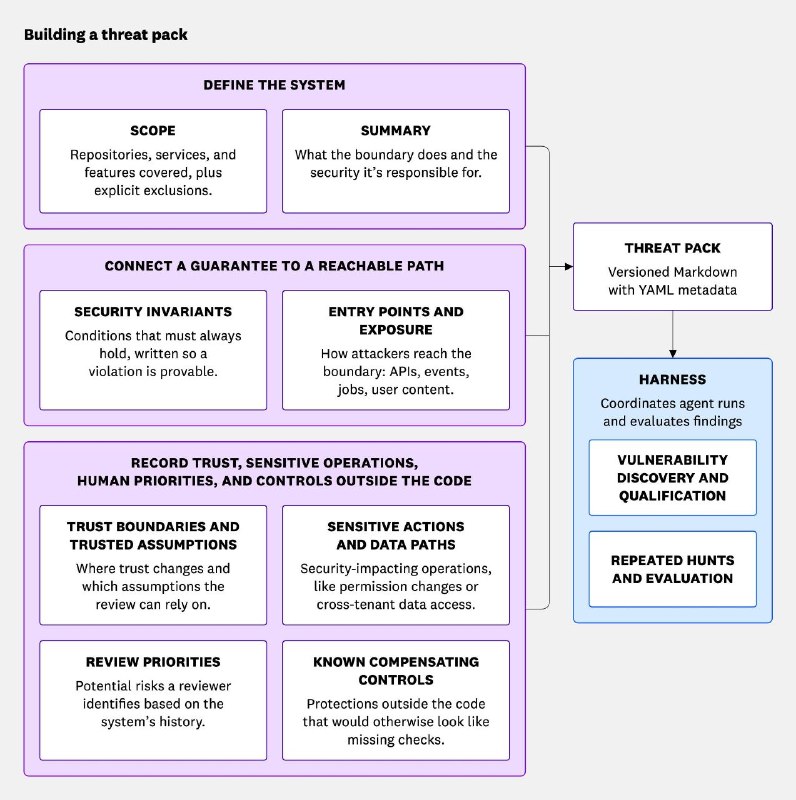
Datadog and Shopify Advance AI-Driven Vulnerability Hunting Systems Datadog unveiled its agentic vulnerability hunting system, which uses human-reviewed "threat packs" containing security invariants and compensating controls. A "judge agent" filters findings, and repeated benchmark hunts measure detection consistency. (источник) Shopify also shared its experience building an "agentic harness" to effectively find and verify vulnerabilities while minimizing false positives. Their custom Ruby application, Dispatch, orchestrates the analysis process, including test bootstrapping, architecture documentation, file cataloging, parallel hunting, verification using a separate model, post-processing, reporting, and remediation. Analysis costs vary from $50-$300 for full scans to $5-$50 for incremental scans, depending on application size. (источник) Emanuela Zaccone from Sysdig highlighted the distinction between correlation and causation in AI security agents, stating that useful agents must connect evidence to a timeline, specific runtime process, and process tree, rather than merely noting co-occurrence. (источник)
-
Kubernetes Outage Root Cause Analysis and Debugging Challenges A multi-region Kubernetes outage was traced back to
systemd-networkdunexpectedly taking over Cilium interfaces after an automaticsystemdupdate. AI tools were instrumental in narrowing down 200 MB of logs to pinpoint the root cause. (источник) Separately, it was noted that developers at Next Insurance spend over 45 minutes per build failure due to a lack of visibility into what went wrong, often resorting to re-triggering pipelines or consulting on-call engineers. This results in wasted compute and interrupted support. (источник)
-
Kubernetes Security and Infrastructure Best Practices Kubernetes 1.37 introduces enhanced hardening for writable container volumes using
noexec,nosuid, andnodevmount options, along withemptyDirpermissions and the sticky bit. A tutorial details these security measures. (источник) Users can pre-check Kubernetes RBAC permissions usingkubectl auth can-i, specifying aServiceAccountto verify access to resources like Pods or their logs (e.g.,kubectl auth can-i list pods -n prod --as=system:serviceaccount:dev:fooandkubectl auth can-i get pods --subresource=log). (источник) -
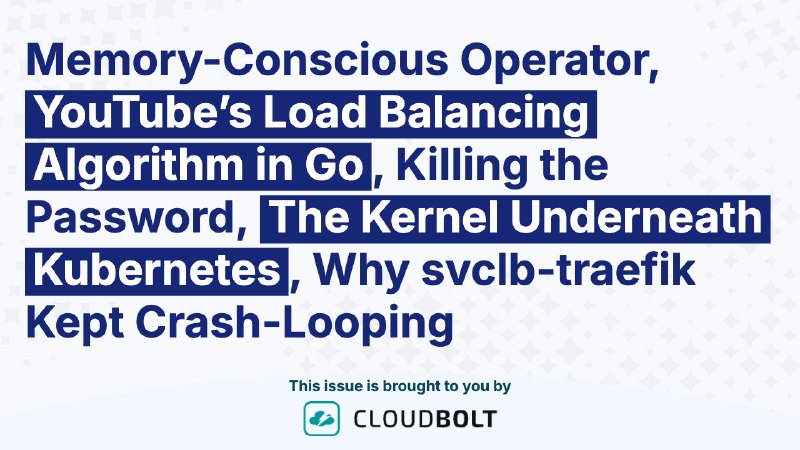
LearnKube Weekly #211 Editor Picks Cover Advanced Kubernetes Topics The latest LearnKube Weekly digest includes articles on:
- Reducing Kubernetes operator memory usage with filtered API reads instead of cluster-wide Deployment caches.
- A Go implementation of Google's Prequal load-balancing algorithm, including benchmark analysis.
- Replacing AKS workload client secrets with Workload Identity Federation without altering identity or Key Vault permissions.
- Troubleshooting a k3s Traefik crash loop linked to
nftablessupport in an NVIDIA Jetson vendor kernel. - Spinifex's evolution into a self-hosted AWS-compatible platform using EKS on K3s, complete with databases, load balancers, and production hardening.
The digest also features a free technical guide to Kubernetes rightsizing from StormForge. (источник)
-
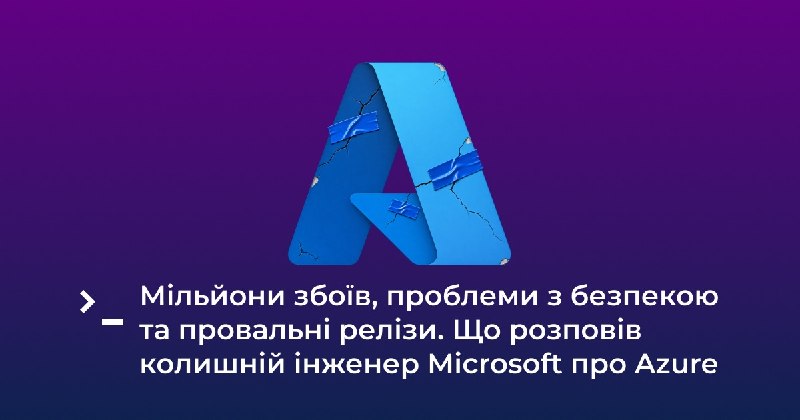
Former Microsoft Engineer Exposes Significant Internal Issues in Azure A former Microsoft engineer reportedly revealed extensive internal problems within Azure, including millions of monthly process crashes, less than 40% test coverage, hundreds of thousands of WireServer failures, potential security risks, and long-standing difficulties in modernizing the platform due to concerns about disrupting infrastructure. (источник) Additionally, the Azure & .NET Digest by Viktor Karabediants covered AKS on bare metal Ubuntu, isolated Azure Container Apps environments for AI agents, and recent changes in Azure networking and storage, alongside .NET security updates and service deprecation dates. (источник)
Live discussions
No significant live discussions were observed outside of channel news/facts within the given period.
Social graph
No distinct participant roles or connections were observed as there were no discussions in the provided chat messages.
Final analytics
The day's content for Kubernetes & DevOps was heavily concentrated on security, particularly advancements in AI-driven vulnerability hunting and infrastructure hardening. The emergence of agentic systems from Datadog and Shopify for automating security analysis indicates a growing industry trend towards leveraging AI to proactively identify and mitigate risks, although the challenge of distinguishing correlation from causation remains a key discussion point.
Significant operational insights included detailed postmortems of Kubernetes outages and security incidents, highlighting the critical importance of deep visibility into infrastructure and robust incident response strategies, as demonstrated by Bitrise's decision for a full system shutdown. The revelations about Azure's internal struggles underscore the persistent challenges even large cloud providers face in maintaining reliability, security, and modernization across complex infrastructures.
Overall, the tone was informative and practical, providing actionable technical details on Kubernetes security and optimization, alongside strategic insights into DevSecOps innovation. The absence of group discussions suggests either a quiet day in the chats or a lack of engagement with the specific news topics presented in the channels. This lack of community interaction leaves a gap in understanding immediate reactions or shared experiences from practitioners regarding these developments.