Key events and trends
● Monitoring Data Can Lead to False Conclusions
Konstantin Bank, a developer and independent researcher, illustrated how monitoring can provide technically correct data but lead to erroneous conclusions, using examples from Linux servers. This highlights a critical aspect of infrastructure observability – the interpretation of metrics (источник).

● Microsoft Azure & .NET Digest Focuses on AKS and Multicloud Interconnect
Viktor Karabediantsev prepared the 31st issue of the Azure & .NET Digest, detailing fresh Microsoft updates. Key items include AKS Artifact Streaming and Flex Nodes, Multicloud Interconnect for Azure and AWS, PostgreSQL 18 in Elastic Clusters, new Foundry and Copilot capabilities, and September .NET updates. The focus on AKS and Multicloud Interconnect is highly relevant to server infrastructure and cloud strategy (источник).
● Tutorial on Using Helmsniff for Helm Chart Security Analysis A tutorial demonstrated how to use helmsniff, a tool for rendering thousands of Helm charts and reporting risky settings, such as containers running as root. The findings are presented as a plain CSV for analysis, aiding in identifying and mitigating security vulnerabilities in Kubernetes deployments (источник).
● Predicting the Next Decade of Kubernetes: Invisible Infrastructure
Alex Kestner forecasted that the infrastructure powering Kubernetes clusters will increasingly become invisible over the next decade. He suggested that customers will shift their focus entirely to the applications that serve their users, rather than managing the underlying platform (источник).
 Watch video
● kubectl-rsync Plugin for Efficient File Transfers to Kubernetes Pods
A new kubectl plugin, kubectl-rsync, was highlighted. It leverages rsync to copy only changed files between a local machine and Kubernetes pods, offering compression, progress tracking, and resumable transfers, which can significantly improve efficiency in managing containerized applications (источник).
● Atlassian's AI SDLC Transformation Playbook
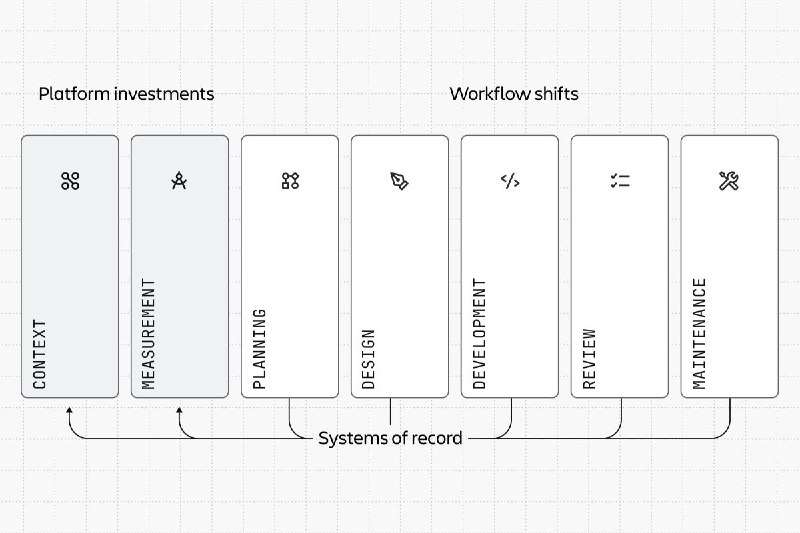
Atlassian released their AI SDLC transformation playbook, outlining how agentic AI can reshape the entire development lifecycle. The playbook emphasizes the need for platform investments in a context graph and measurement, alongside workflow shifts across planning, design, development, review, and maintenance, while maintaining human oversight for governance and judgment. This initiative, while broad, touches upon security aspects implicitly through enhanced review and contextual understanding in the SDLC (источник, источник).
Live discussions
No standalone live discussions were observed in the monitored groups within the specified period.
Social graph
No participant contributions were observed in the monitored groups within the specified period.
Final analytics
The day's content for the "Kubernetes & DevOps" group primarily revolved around practical tools and strategic shifts in server infrastructure, security, and monitoring. Key themes included enhancing Kubernetes management and security with tools like kubectl-rsync and helmsniff, improving cloud infrastructure through Azure updates focusing on AKS and multicloud capabilities, and a critical look at monitoring practices to avoid misinterpretation. A forward-looking perspective on Kubernetes' evolution towards invisible infrastructure suggests a future where operational complexity is abstracted away, allowing developers to focus purely on applications. The discussion around Atlassian's AI SDLC playbook, while broader, implies an increasing role for AI in streamlining development, which could eventually impact DevSecOps practices by automating certain security checks and context gathering.
The absence of group discussions prevented any analysis of community pulse, potential disagreements, or direct user experiences regarding these announcements and tools. This indicates a quiet day in terms of community interaction on the specific topics, or that discussions occurred in unmonitored or private channels. Despite the lack of interactive feedback, the news items themselves highlight a continued industry focus on refining operational efficiency, strengthening security postures, and preparing for future shifts in cloud-native and AI-driven development.