Key events and trends
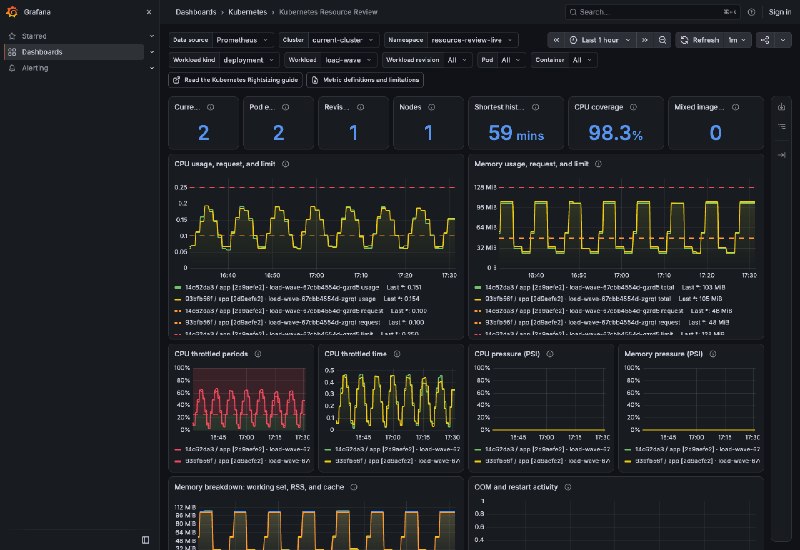
● Kubernetes Resource Review Mixin Released for Advanced Monitoring: An open-source Grafana dashboard with Prometheus recording rules, the Kubernetes Resource Review Mixin, has been released. It allows users to contextualize CPU and memory usage in Kubernetes by inspecting individual Pods against requests/limits, monitoring throttling, pressure (with PSI metrics), and OOM/restart activity. The tool also provides insights into replicas and workload revisions with p95, maxima, and resource differences. This mixin extends the insights from "The Technical Guide to Kubernetes Rightsizing." (источник)
● Hortator Enables Secure AI Agent Orchestration in Kubernetes: Hortator is a new tool that allows AI agents to dynamically spawn sub-agents. Each sub-agent runs within its own Kubernetes pod, enforced with budget caps, network policies, PII redaction, and capability inheritance. This design ensures that child agents cannot escalate permissions beyond their parent, enhancing security for AI workloads in Kubernetes environments. (источник)
● Detailed Write-Up on Kubernetes Cluster Escape via LangFlow RCE and Forged JWT: A Hack The Box machine write-up has been published, detailing a step-by-step process to achieve a full Kubernetes cluster escape. The exploit chains a LangFlow Remote Code Execution (RCE) vulnerability with a forged JSON Web Token (JWT) to compromise the cluster. (источник)
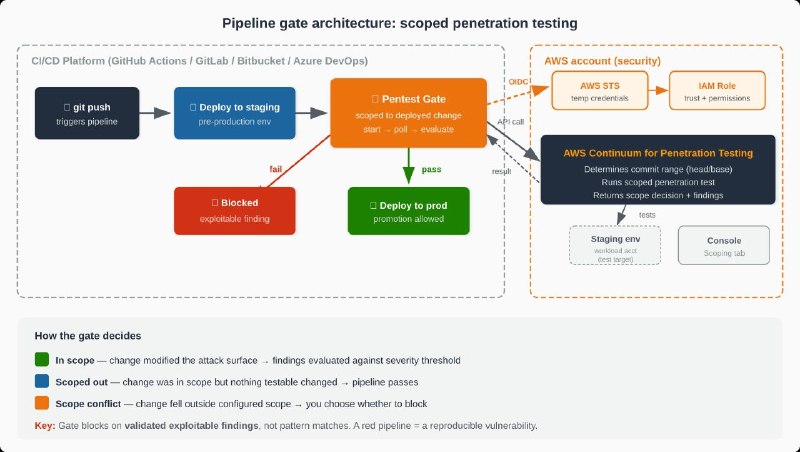
● AWS Continuum for Automated Penetration Testing in CI/CD: A method to deploy a CI/CD gate using AWS Continuum was presented. This system runs penetration tests scoped to each deployed change and automatically blocks promotion to production if validated findings exceed a predefined severity threshold. Authentication for this process utilizes OIDC, eliminating the need for stored keys and improving security. (источник)
● Guide to Kubernetes Events and Controller Design: An article was highlighted that explores the significance of Kubernetes events. It covers what events are, their various types, and their utility in diagnostics, problem-solving, and analyzing changes within a cluster. The article explains how to leverage events, particularly in the context of designing custom Kubernetes controllers. (источник)
● DevCrowd Launches 2026 Survey on SRE/DevOps/Platform Engineering in the AI Era: DevCrowd initiated a new survey targeting SRE, DevOps, and Platform Engineers to understand how their roles are evolving with the rise of AI. The survey focuses on aspects such as current automation levels, the use of AI in production, incidents related to AI-generated code, crucial soft skills, and the human cost associated with maintaining reliability, including on-call duties. The anonymous survey aims to provide insights into market dynamics and trends, with results expected in early December. (источник)

Live discussions
(No live discussions were observed on 20.10.2026 within the monitored groups.)
Social graph
(No significant participant interactions were observed on 20.10.2026 to form a social graph.)
Final analytics
The day's events highlight a strong and ongoing focus within the Kubernetes & DevOps community on enhancing server infrastructure security, robust monitoring, and the strategic integration of AI. Multiple new tools and analyses underscore a proactive approach to operational challenges and emerging threats.
Key trends include advanced Kubernetes observability with the release of the Resource Review Mixin, emphasizing granular insight into resource usage and potential bottlenecks. Security remains a paramount concern, as evidenced by the detailed write-up of a Kubernetes cluster escape exploit and the introduction of Hortator for secure AI agent orchestration. This demonstrates a dual approach: dissecting existing vulnerabilities while building security into new, complex systems like AI-driven architectures. Furthermore, the adoption of automated security gates in CI/CD pipelines via AWS Continuum signifies a move towards embedding security practices earlier in the development lifecycle, aligning with DevSecOps principles.
The DevCrowd survey indicates a critical self-assessment within the SRE, DevOps, and Platform Engineering roles concerning the impact of AI. This reflects a broader industry discussion about automation's limits, the human element in reliability, and the potential for AI to introduce new types of incidents. The absence of group discussions suggests that these announcements are either yet to be widely deliberated or were absorbed as informative updates rather than sparking immediate debate among community members.