Key events and trends
● Simplified Kubernetes Architecture for Lightweight Deployments Owumi Festus, Founding AI Engineer at Plexe AI, detailed architectural decisions for building a lightweight Kubernetes version from scratch. Key simplifications include replacing etcd with in-memory storage, removing containers entirely in favor of state logging for pod lifecycle, eliminating authentication, service discovery, and RBAC, using polling instead of watches for API server communication, and limiting resource definitions to pods only. (источник)
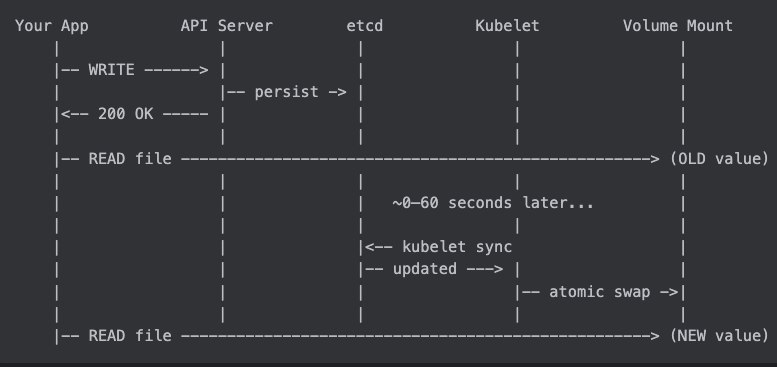
● Understanding ConfigMap Update Delays in Kubernetes
An article explained why a ConfigMap changed via the API might appear outdated in a mounted file for up to a minute, attributing the delay to the kubelet's update mechanism. (источник)
● Differentiating Node and Pod Security in Kubernetes Rodrigo Bersa from AWS clarified the distinction between node and pod security. Node security, a compute boundary, can be controlled with security groups or firewall rules. Pod security, critical for isolating multiple pods on the same node, requires network policies for east-west traffic control. For deeper application-layer control, Service Mesh with Envoy adds authorization and mTLS for pod-to-pod encryption. (источник)
● New Kubectl Command-Injection Vulnerability (CVE-2025-69902) A write-up detailed CVE-2025-69902, a command-injection flaw in a kubectl MCP server. This vulnerability allows an attacker to execute arbitrary commands on the host by processing user input through a shell. (источник)
● LLM Effectiveness in Vulnerability Scanning Semgrep's research explored whether LLMs "understand" or merely "pattern-match" when searching for vulnerabilities, specifically IDOR flaws. They introduced metrics such as Counterfactual, Metamorphic, Selectivity, and Stability & Coverage to evaluate models like Kimi K2.7, GLM-5.2, MiniMax M3, Opus 4.8, and GPT-5.5. The results suggested that models indeed "understand what is happening" rather than just finding patterns, though overall bug detection rates still have room for improvement. (источник)
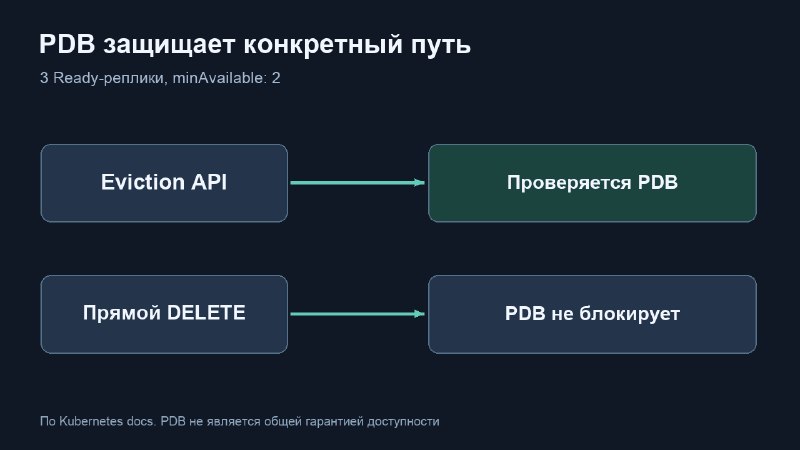
● PodDisruptionBudget Limitations Against Direct kubectl delete
An analysis highlighted that PodDisruptionBudget (PDB) mechanisms, while effective for voluntary evictions via the Eviction API (e.g., kubectl drain), do not prevent direct deletion of Pods or Deployments using kubectl delete. PDBs limit voluntary disruptions but do not guarantee application availability against direct deletion or hardware failures. Operators should verify how tools remove Pods during maintenance. (источник)
Final analytics
The day's content primarily focused on practical aspects of Kubernetes management and security. Key themes included understanding Kubernetes internal behaviors (ConfigMap updates, PDB limitations), architectural considerations for custom Kubernetes deployments, and critical security aspects like differentiating node and pod security and a newly detailed kubectl vulnerability. The application of AI in DevSecOps, specifically for vulnerability scanning, also emerged as a significant area of research.
The overall tone was informative and technical, providing deep dives into specific system behaviors and security challenges within server infrastructure. There were no community discussions observed to provide additional context or sentiment, indicating either a quiet day in discussions or a focus on consumption of channel content. Information gaps include the lack of practical implementations or real-world impact discussion regarding the detailed vulnerabilities or architectural insights. Potential consequences from the day's events highlight the continuous need for vigilance in Kubernetes security (CVE-2025-69902), careful architecture planning for customized deployments, and a nuanced understanding of core Kubernetes features like ConfigMaps and PDBs to ensure system reliability and security. The research into LLMs for vulnerability detection points to an evolving landscape in AppSec, suggesting future shifts in how security analysis is performed.