Key events and trends
Kubernetes Infrastructure and Management
- PVC Autoresizer Tool Released: A new tool,
pvc-autoresizer, has been introduced. It monitors PersistentVolumeClaim (PVC) usage and automatically expands volumes before they run out of space, integrating with Prometheus or the Kubernetes Metrics API for usage data (источник). - Discussion on Kubernetes Tenancy Models and Staffing Costs: @KubeFM (forwarded by @Kubesploit) reported on a discussion where Molly Sheets, Daniele, and Bart examined the staffing implications of supporting multiple Kubernetes tenancy models. Key topics included assigning ownership across these models, providing AI Ops with cross-team context, and planning for canary and cell-based releases (источник).
- Increasing Complexity in Kubernetes Security: @KubeFM (forwarded by @Kubesploit) highlighted that Marina Moore from Edera explained how, as Kubernetes platforms mature and become more complex, securing them and maintaining explainability becomes increasingly challenging. The core issue is that more components mean more systems to understand and protect (источник).

Monitoring and Cloud Infrastructure
- Insights into RDS Connection Pooling in AWS: @CatOps shared a story from a colleague about experiences with RDS connection pooling. The main takeaway was that while RDS Proxy is a managed and convenient option, it is not a universal solution, and traditional tools like pgbouncer remain effective for many use cases (источник).
- New Uptime Monitoring CLI Tool: @securedevops announced the
Owloops/updoproject on GitHub, an uptime monitoring CLI tool equipped with alerting and advanced settings (источник). - Monitoring Linux Pressure Stall Information (PSI): @devopsslib provided information on using Linux PSI (Pressure Stall Information) to monitor resource contention beyond simple RAM usage. By reading
/proc/pressure/memory,/proc/pressure/cpu, and/proc/pressure/io, users can observe the percentage of time tasks spend waiting for resources.someindicates partial task waiting, whilefullmeans all non-idle tasks are waiting. This offers deeper insight into system bottlenecks, although it does not pinpoint specific processes or provide universal alarm thresholds (источник).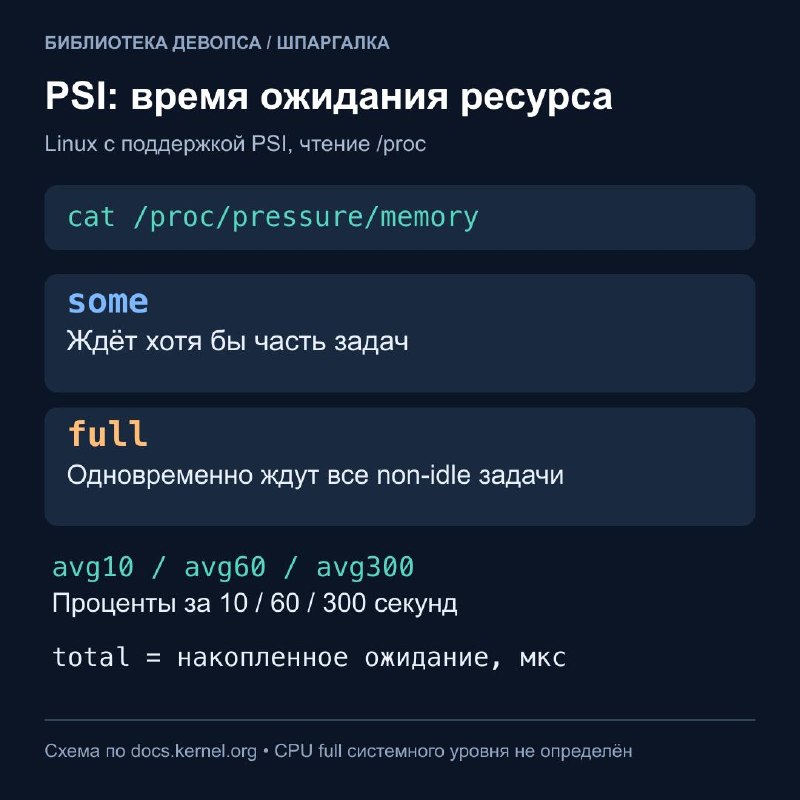
DevSecOps and Vulnerability Management
- AI Agents for Bug Fixing and Regression Detection by Trail of Bits: @cloud_sec reported that Trail of Bits released
patching-bugsandregression-hunt, agent plugins designed to help AI agents reproduce bugs, develop fixes, and detect regressions using live Proofs of Concept (PoCs).regression-huntis noted to reduce false positives by 25% compared to a baseline Codex prompt, though it confidently reports fewer known regressions (источник).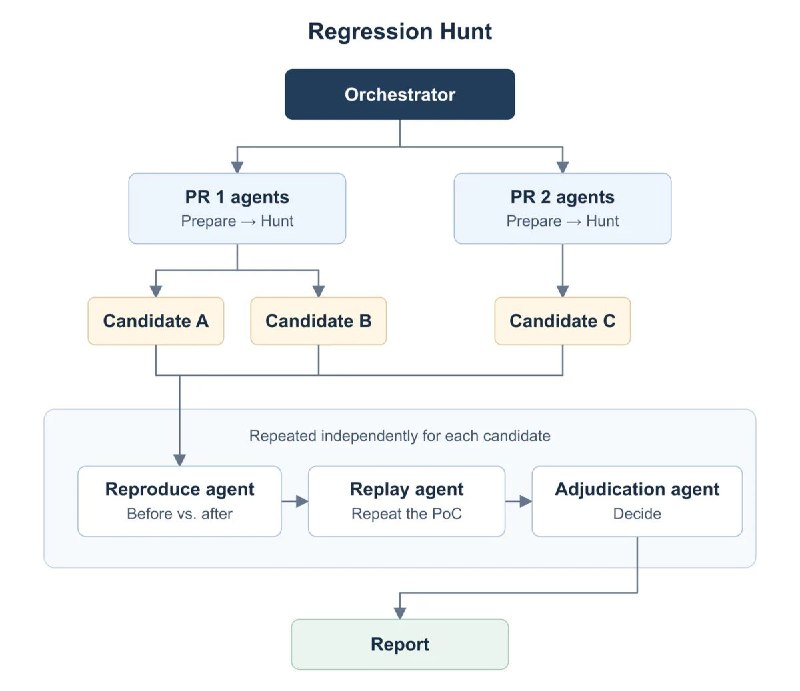
- cve.now: A New CVE Vulnerability Feed with LLM Integration: @devsecops_weekly announced
cve.now, a new resource for vulnerability information. It aggregates data from various sources like CVE lists, OSV, GitHub Security Advisory, and NVD. A unique feature is the use of Large Language Models (LLM) to generate "understandable" descriptions for each CVE. The platform also allows uploading lockfiles to identify vulnerabilities in software and can act as an MCP server (источник).
Final analytics
The day's events highlight a continued push for efficiency and robustness in server infrastructure, particularly within the Kubernetes ecosystem, alongside significant advancements in monitoring and security practices. Automation in Kubernetes is progressing with tools like pvc-autoresizer, aiming to reduce manual operational overhead. Concurrently, the increasing complexity of Kubernetes deployments is acknowledged, bringing new challenges in both management (tenancy models) and, critically, security, requiring more sophisticated strategies.
Monitoring remains a cornerstone of resilient operations, with detailed insights into Linux performance metrics (PSI) and the introduction of specialized tools for uptime monitoring. Cloud database management also received attention, emphasizing that while managed services like AWS RDS Proxy offer benefits, foundational tools like pgbouncer remain highly relevant for specific use cases.
A prominent trend is the growing integration of Artificial Intelligence into DevSecOps workflows. AI agents are being developed to automate bug fixing and regression detection, and new vulnerability feeds are leveraging Large Language Models to make CVE information more accessible and actionable. This indicates a clear shift towards more intelligent and automated approaches to identifying and mitigating security risks, suggesting a future where AI plays an increasingly prominent role in safeguarding complex infrastructure. The overall tone reflects a proactive community focused on continuous improvement in efficiency, scalability, and security within dynamic IT environments.