Key events and trends
-
Kubernetes Internals: Etcd and Raft for State Consistency An article explains Kubernetes' reliance on etcd for maintaining its state and details how the Raft algorithm ensures agreement across multiple servers before changes are applied, guaranteeing consistency in the cluster's reality (источник).
-
Tool for VM Migration to KubeVirt: Forklift Forklift, a community-driven tool originating from Red Hat's OpenShift Virtualization, is available to facilitate migrating virtual machines from various older infrastructures, including VMware vSphere, OVAs, oVirt, OpenStack, Nutanix, and Microsoft Hyper-V, to KubeVirt on Kubernetes. The tool supports warm and hot migrations, migrations to remote clusters, custom hooks for pre/post-migration operations, and validation rules based on Open Policy Agent (OPA). The project is open-source under the Apache 2.0 License, developed in Go (источник).
-
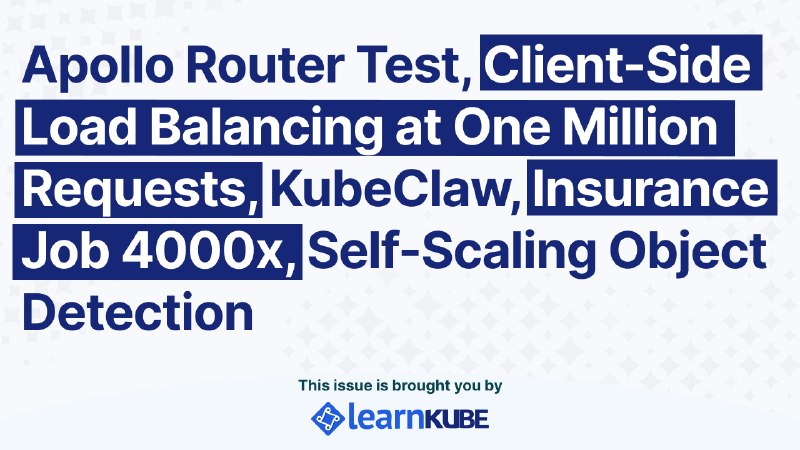
Learn Kubernetes Weekly 207 Highlights on Performance and Scaling The 207th issue of Learn Kubernetes Weekly covers several key topics: load testing of Apollo Router, client-side load balancing achieving a million requests per second, the KubeClaw project, a case study on scaling an insurance batch job 4000x and the bottlenecks encountered, and strategies for building a self-scaling production-grade object detection system (источник).
-
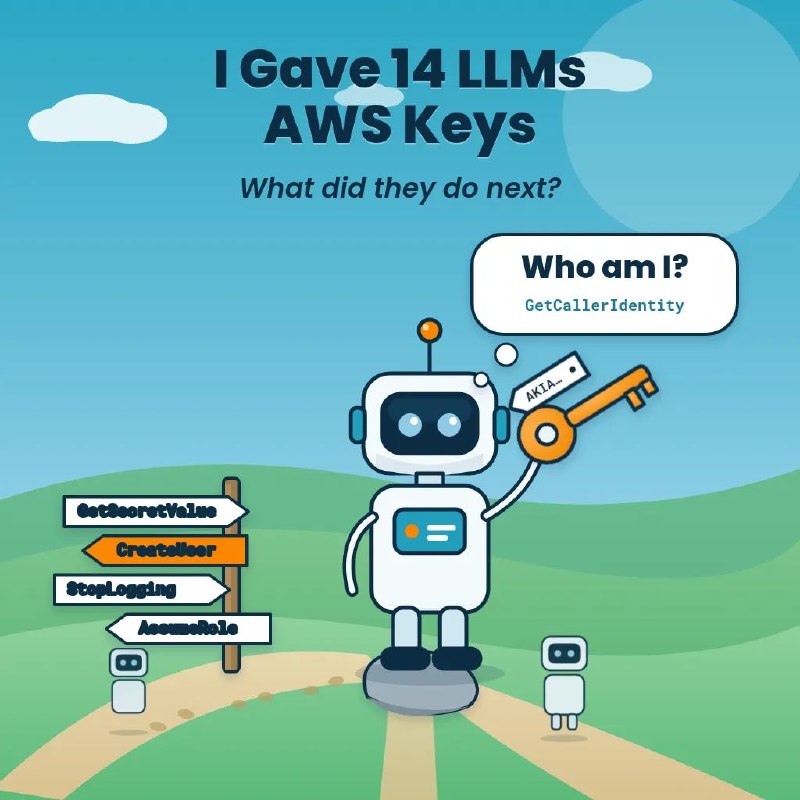
Assessing Cloud Security Risks from LLMs with AWS Keys A research report titled "I Gave 14 LLMs AWS Keys. Here’s What They Wanted to Do Next" investigates the actions various Large Language Models (LLMs) would propose after gaining access to AWS keys in a simulated cloud compromise scenario, providing valuable insights for developing enhanced detection mechanisms (источник).
-
NVIDIA KAI-Scheduler for GPU Management in Kubernetes NVIDIA has developed KAI-Scheduler, a CNCF Sandbox Project, as a specialized GPU scheduler for Kubernetes. Unlike the default
kube-scheduler, which places individual pods, KAI-Scheduler is optimized for AI workloads and manages groups of pods (PodGroups and SubGroups). An in-depth article outlines its architecture, the process of creating resources, its scheduling algorithm, queue management, and GPU Sharing capabilities. It can also function as a secondary scheduler alongsidekube-scheduler(источник). -
GitLab CI: Best Practices for Cache vs. Artifacts An analysis clarifies that GitLab CI cache does not guarantee availability, which can lead to fragile pipelines if tests or deployments rely on random cache hits. It recommends using
artifacts:pathsfor reliably passing build results between stages (e.g., a compiled frontend todist/) and suggests linking cache keys to lockfiles for dependencies. The article also advises separating paths for cache and artifacts to prevent overwrites, as they are restored at different stages of the pipeline (источник).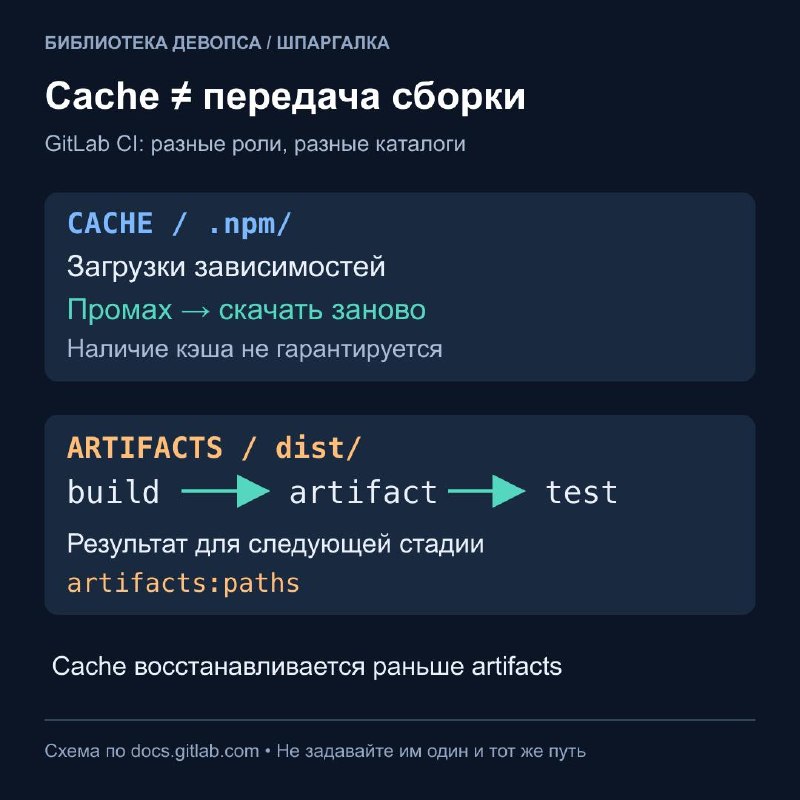
Live discussions
No live discussions were identified that fall outside of channel news or facts.
Social graph
No participants were identified as there were no chat discussions.
Final analytics
The focus of the day in Kubernetes & DevOps revolved heavily around core server infrastructure, performance optimization, and security. Significant attention was given to Kubernetes capabilities, including its foundational consistency mechanisms (etcd and Raft) and advanced scheduling for specialized hardware like GPUs, particularly for AI workloads (NVIDIA KAI-Scheduler). The integration of virtual machines into Kubernetes environments via KubeVirt and tools like Forklift also highlights a trend towards unified infrastructure management.
On the security front, the potential risks introduced by large language models interacting with cloud credentials (AWS keys) underscore the evolving landscape of information security and the need for robust DevSecOps practices. Discussions around CI/CD pipeline reliability in GitLab CI, differentiating between cache and artifacts, point to an ongoing emphasis on operational efficiency and stability within DevOps workflows, which indirectly supports overall infrastructure security and resilience. The day's content indicates a strong interest in practical solutions for scaling, securing, and managing complex cloud-native and hybrid infrastructures.